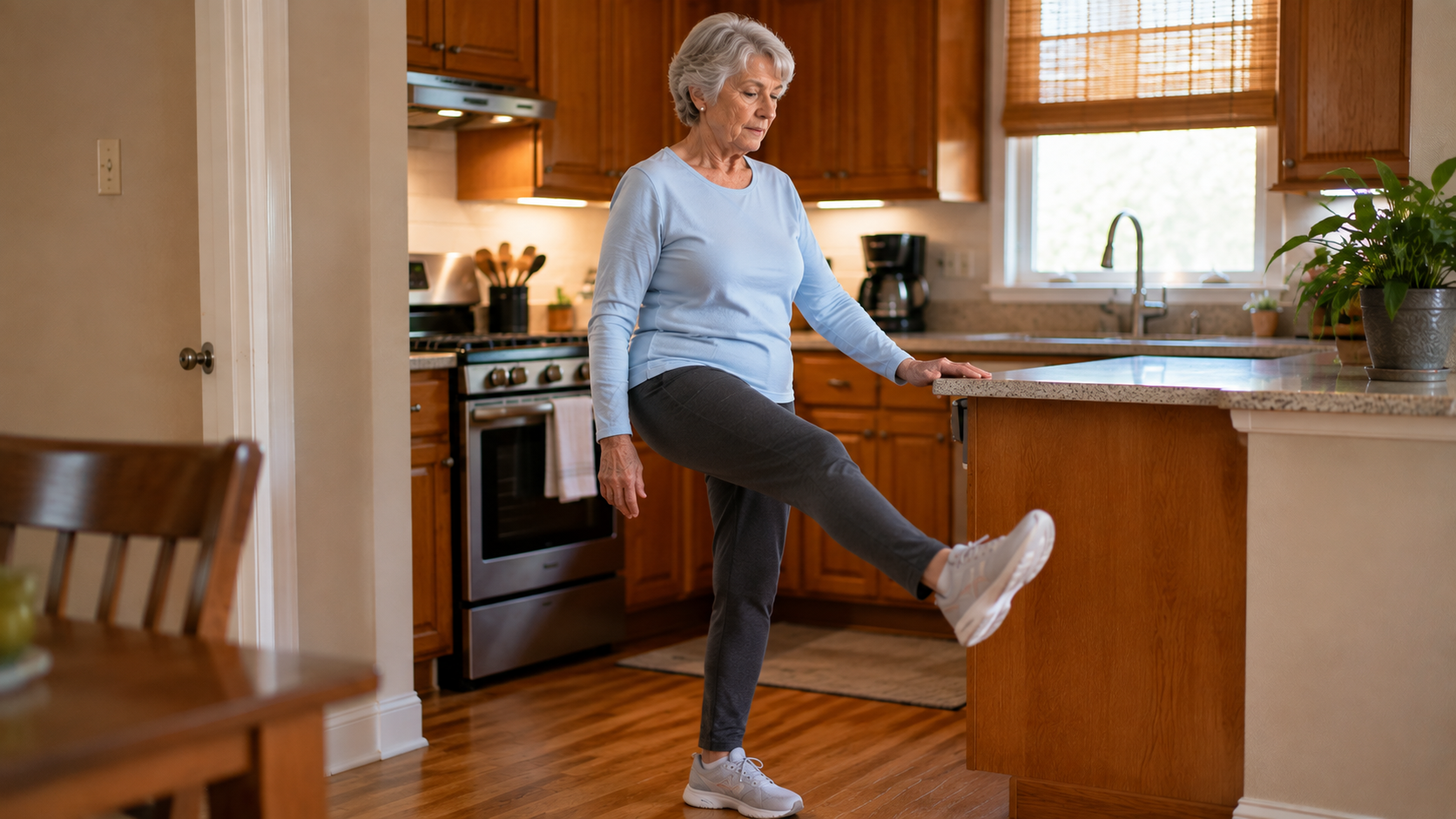
Mobility — the ability to move your body freely and comfortably through everyday tasks — often declines so gradually that people don’t notice until reaching for a top shelf feels genuinely difficult, or getting up from the floor requires real planning rather than an automatic movement. Learning how to improve mobility naturally doesn’t require medical intervention or expensive equipment for most people; it comes down to consistent, targeted movement practiced regularly over time.
Having worked with seniors across a wide range of mobility levels, I’ve seen how much natural, non-invasive approaches can restore genuine ease of movement, even for those who assumed their current limitations were simply permanent. Mobility, much like strength and flexibility, responds meaningfully to the right kind of consistent practice.
Understanding Mobility as Distinct From Flexibility and Strength
Mobility is often confused with flexibility, but the two are meaningfully different. Flexibility refers to a muscle’s ability to lengthen, while mobility refers to a joint’s ability to move actively and with control through its full range of motion. You can be flexible in a passive stretch but lack the strength and coordination to actively control that same range of motion during functional movement — true mobility requires both flexibility and the strength to actively use that range.
This distinction matters because improving mobility naturally requires more than just stretching — it requires practicing controlled, active movement through full ranges of motion, building both the flexibility and the strength and coordination needed to use that flexibility functionally in daily life.
Why Mobility Loss Often Goes Unnoticed Until It’s Significant
Mobility tends to decline so gradually that people unconsciously adapt their movement patterns to compensate, often without realizing how much has actually changed. Someone who once reached overhead easily might start using a step stool for tasks that didn’t previously require one, or begin turning their entire body rather than just their head to look behind them while driving, all without consciously registering these as compensations for declining mobility.
This gradual, unconscious adaptation is part of why mobility loss often isn’t addressed until it becomes significant enough to genuinely limit daily activities. Paying deliberate attention to which movements have quietly become harder or been avoided altogether can reveal specific areas worth addressing before they progress further, rather than waiting until a more serious limitation forces the issue.
The Connection Between Mobility and Fall Risk
Reduced mobility, particularly in the hips, ankles, and thoracic spine, directly affects balance and increases fall risk. Limited ankle mobility, for example, makes it harder to adjust foot position quickly when navigating uneven ground, while limited hip mobility can shorten stride length and reduce the ability to catch yourself effectively if you start to stumble.
This connection means that mobility work isn’t simply about comfort and ease of movement — it’s directly protective against one of the most significant risks to independence in later life. Addressing mobility limitations, particularly in these key areas, provides benefits that extend well beyond simply feeling less stiff during daily activities.
Practice Functional Movement Patterns Daily
Rather than isolated stretches alone, practicing the actual movement patterns used in daily life helps maintain the specific mobility needed for real-world function.
Squatting pattern: Practice sitting down and standing up from a chair repeatedly, focusing on control rather than speed. This directly maintains the mobility and strength needed for countless daily transitions.
Reaching pattern: Practice reaching overhead, to the side, and across your body regularly, rather than only reaching in these directions when a specific task requires it.
Rotation pattern: Practice gentle seated or standing torso rotations, mimicking the movement used when reaching into a back seat or looking over your shoulder while driving.
Get on and Off the Floor Regularly
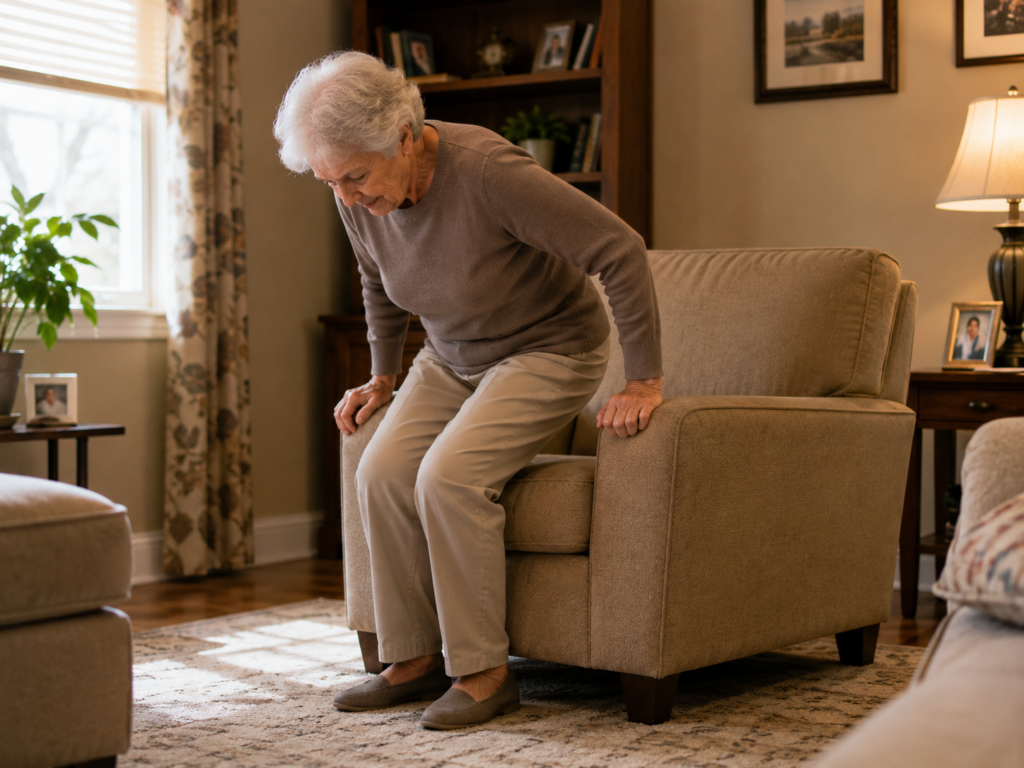
The ability to get down to the floor and back up again is one of the most telling markers of functional mobility, yet it’s a movement many people stop practicing entirely as they age, which accelerates the loss of the very capability they’re avoiding.
Practicing safely: If you’re currently comfortable getting to the floor, practicing this transition periodically — using furniture for support as needed — helps maintain the strength, balance, and confidence required. If you’re not currently comfortable with this movement, working with a physical therapist to safely rebuild this capability can be genuinely valuable, since it addresses one of the most functionally important movements for long-term independence.
Incorporate Multi-Directional Movement
Many people’s daily movement is limited almost entirely to forward and backward motion — walking, sitting, standing. Deliberately incorporating side-to-side and rotational movement helps maintain mobility that purely linear movement doesn’t address.
Simple ways to add this: Side-stepping during a portion of your regular walk, gentle standing torso twists, or simply varying your walking routes to include more turns and directional changes all help maintain multi-directional mobility that daily life increasingly lacks as routines become more fixed and predictable.
Address Specific Areas of Stiffness Directly
Rather than a generic full-body approach, identifying your specific areas of stiffness and addressing them directly tends to produce more meaningful mobility improvement.
Common problem areas include:
- Hips: Often tight from prolonged sitting, contributing to shortened stride length and lower back discomfort
- Thoracic spine (upper back): Often stiff from years of forward-leaning posture, limiting rotation and overhead reaching
- Ankles: Often overlooked but significantly affect walking mechanics and balance
Spending focused time on your specific tight areas, rather than a generic routine that treats all joints equally, tends to produce faster, more noticeable improvement in the areas that matter most for your daily function.
Stay Consistently Active Throughout the Day
Beyond dedicated exercise sessions, overall daily movement patterns significantly affect mobility. Long periods of uninterrupted sitting contribute to stiffness and reduced mobility regardless of how much dedicated exercise you perform elsewhere in your day.
Practical strategies: Standing and moving briefly every 30-60 minutes during extended sitting, choosing stairs over elevators when reasonable, and finding small opportunities for movement throughout the day all support mobility maintenance beyond what dedicated exercise sessions alone can provide.
Tracking Mobility Progress in Meaningful Ways
Unlike strength, where progress is easily measured through weight lifted or repetitions completed, mobility improvement can feel harder to track objectively. A few practical approaches include noting specific tasks that felt difficult when you started — reaching a particular shelf, turning to check a blind spot, getting up from a low chair — and periodically reassessing how those same specific tasks feel as you continue your practice.
Some people find it helpful to take a simple video of themselves performing a functional movement, like reaching overhead or getting up from the floor, at the start of a mobility practice and again after several weeks, providing a visual comparison that can reveal genuine progress that might otherwise be difficult to notice day to day, since improvement tends to happen gradually rather than in a single dramatic shift.
Building a Realistic Natural Mobility Routine
A sustainable approach might include:
- Daily: A brief 5-10 minute routine addressing your specific problem areas, plus regular movement breaks throughout the day
- 3-4 times per week: More dedicated practice of functional movement patterns — squatting, reaching, rotating — for 15-20 minutes
- Ongoing: General activity throughout the day, avoiding prolonged uninterrupted sitting
This combination of dedicated practice and general daily movement tends to produce more comprehensive mobility improvement than either approach alone.
How Mobility Work Complements Strength and Cardio Training
While this article focuses specifically on mobility, it’s worth understanding how this fits alongside other forms of exercise. Strength training builds the muscular capacity needed to actively control movement through a range of motion, while cardiovascular exercise supports the overall stamina needed to sustain activity throughout the day. Mobility work bridges these two, ensuring that the strength you build and the endurance you develop can actually be applied through the full range of motion your daily life requires.
A body with excellent cardiovascular fitness and strength but poor mobility may still struggle with specific daily tasks that require reaching, twisting, or getting up and down from various positions. Conversely, excellent mobility without adequate strength may allow a full range of motion but lack the muscular control to use that range safely and effectively during real activities. This is why a comprehensive approach addressing all three areas — strength, cardio, and mobility — tends to produce the most complete functional improvement, rather than focusing exclusively on any single component.
Making Mobility Practice a Sustainable Daily Habit
Given how gradually mobility loss occurs, mobility practice tends to work best as an ongoing, sustained habit rather than a short-term intervention. Building it into existing daily routines — a few minutes of functional movement practice while coffee brews, or gentle rotations during a commercial break — tends to produce far better long-term adherence than treating it as a separate, dedicated commitment requiring its own time slot.
This integration into daily life also reflects the reality that mobility, unlike some other fitness goals, isn’t something you achieve once and maintain automatically afterward — it requires ongoing attention throughout life, much like the daily habits of brushing your teeth or eating balanced meals, rather than a program with a clear beginning and end point.
Nutrition’s Role in Supporting Natural Mobility
While exercise plays the primary role in mobility improvement, adequate hydration and anti-inflammatory nutrition support the tissues involved in movement. Well-hydrated joint tissues and muscles function more effectively, while diets rich in anti-inflammatory foods may help reduce the background inflammation that can contribute to stiffness and discomfort during movement.
This doesn’t replace the need for actual movement practice, but it provides meaningful supporting context that works alongside your exercise routine rather than as a substitute for it.
When Natural Approaches Aren’t Enough
While consistent movement practice helps most people improve mobility meaningfully, certain situations warrant professional evaluation, including sudden mobility changes, significant pain accompanying movement, or mobility limitations that don’t respond to several weeks of consistent practice. A physical therapist can identify specific underlying issues and provide a more targeted, personalized approach when general strategies aren’t producing expected results.
For a complementary stretching routine that supports natural mobility work, our article on a simple stretching routine for seniors covers specific stretches that pair well with the functional movement practices outlined here.
According to the National Institute on Aging, regular physical activity that includes flexibility, strength, and balance components supports mobility and functional independence more effectively than any single type of exercise practiced in isolation.
Frequently Asked Questions
How is mobility different from just being flexible? Flexibility refers to a muscle’s passive ability to lengthen, while mobility refers to a joint’s ability to move actively, with control, through its full range — mobility requires both flexibility and the strength to use that range functionally in real movement.
How long does it take to notice mobility improvement? Many people notice easier movement in specific daily tasks within 3-4 weeks of consistent practice, though more significant improvement in stiff or long-neglected areas may take several months of regular attention.
Can mobility be improved at any age? Yes — research consistently shows that mobility responds to appropriate movement practice throughout life, including well into a person’s 80s and beyond, regardless of how long mobility has been declining previously.
Do I need special equipment to improve mobility naturally? No — most mobility work relies on bodyweight movement and doesn’t require any special equipment, though a sturdy chair for support during certain exercises can be helpful, particularly for those just beginning to rebuild specific movement capabilities.
Conclusion
Improving mobility naturally comes down to consistent, targeted movement practice — addressing your specific stiff areas, practicing functional movement patterns regularly, and staying active throughout the day rather than relying solely on dedicated exercise sessions. This approach can meaningfully restore ease of movement and support long-term independence, regardless of how long mobility challenges have been part of your daily experience or how gradually they developed.
Disclaimer: This article is intended for general informational and educational purposes only and does not constitute medical advice. Please consult your doctor or a physical therapist before beginning any new movement routine, especially if you have existing joint conditions or significant mobility limitations.