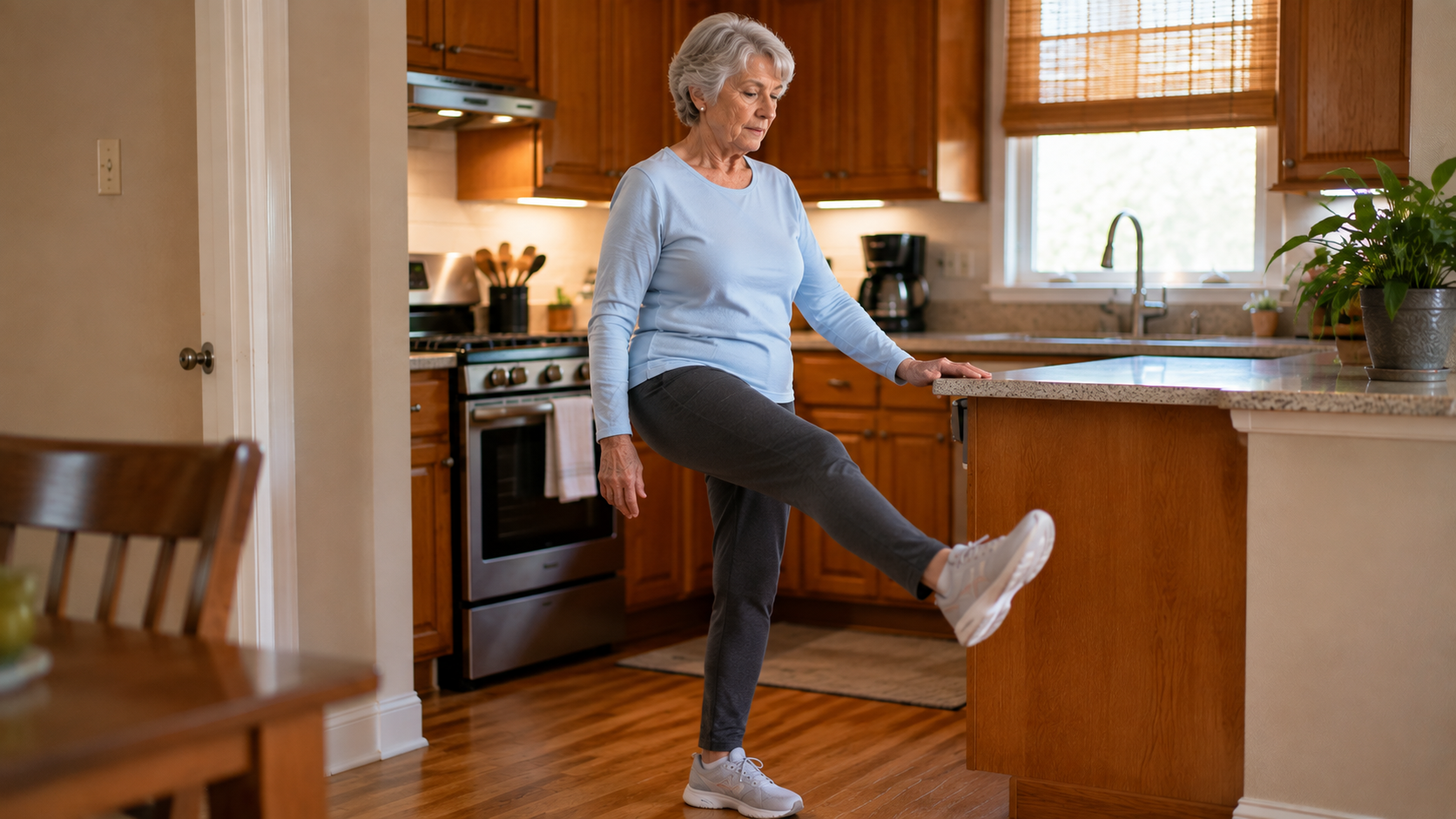
Starting an exercise routine can feel intimidating, especially if mobility, balance, or joint pain make standing exercises feel risky or overwhelming. Chair exercises for beginners solve this problem directly — offering a genuinely effective way to build strength, improve circulation, and increase confidence, all while seated safely and supported the entire time, without any pressure to rush toward standing movement before you feel ready.
Having worked with seniors at many different starting points in their fitness journey, I’ve seen how much chair-based exercise can open the door to movement for people who felt completely shut out of traditional fitness routines. This isn’t a lesser version of “real” exercise — it’s a legitimate, research-supported approach that meets your body exactly where it is right now, without judgment or unrealistic expectations about what recovery or progress should look like.
Why Chair Exercises Are a Genuinely Effective Starting Point
Chair exercises remove the fall risk associated with standing movements, making them ideal for anyone with balance concerns, recent surgery, chronic pain, or simply significant time away from regular physical activity. Despite requiring no standing, they still engage major muscle groups, improve circulation, and can meaningfully raise your heart rate when performed with intention and appropriate effort.
Research on seated exercise programs has shown measurable improvements in strength, flexibility, and even mood among participants who previously avoided exercise entirely due to fear of falling or physical limitations. For many people, chair exercises serve as a genuine first step, eventually building enough confidence and strength to incorporate standing movements as ability improves, though this progression is never required or expected.
Seated Marching for Gentle Cardio
This simple movement raises your heart rate gradually without any risk of losing balance.
How to do it: Sit toward the front of a sturdy chair with good posture. Lift one knee toward your chest, lower it, then lift the other, continuing to alternate in a marching motion. Swing your arms naturally to engage your upper body as well. Aim for 30-60 seconds, resting as needed.
Seated Knee Extensions for Leg Strength
This exercise directly targets the muscles that support standing, walking, and climbing stairs.
How to do it: Sit with your back straight and feet flat on the floor. Slowly extend one leg straight out in front of you until it’s parallel to the floor, hold briefly, then lower it back down with control. Complete 10-12 repetitions on each leg, focusing on slow, controlled movement rather than speed.
Seated Arm Raises for Shoulder Strength
Shoulder strength supports everyday tasks like reaching overhead shelves or lifting grocery bags.
How to do it: Sit upright with arms resting at your sides, holding light weights or household items like water bottles if desired. Slowly raise both arms out to the sides until they reach shoulder height, hold briefly, then lower back down with control. Complete 10-12 repetitions.
Seated Torso Twists for Core Engagement
A strong core supports better posture and balance in all other activities.
How to do it: Sit with feet flat on the floor and arms crossed over your chest. Gently rotate your upper body to one side, hold briefly, then rotate to the other side. Keep your hips facing forward throughout the movement. Complete 10 rotations on each side.
Seated Calf Raises for Circulation and Ankle Strength
This gentle movement supports circulation in the lower legs, which can be particularly valuable for those who sit for extended periods.
How to do it: Sit with feet flat on the floor. Keeping your toes on the ground, lift both heels as high as comfortable, hold briefly, then lower back down. Complete 12-15 repetitions, focusing on a slow, controlled movement.
Seated Shoulder Blade Squeezes for Posture
Poor posture often develops gradually and can contribute to back pain and reduced mobility over time.
How to do it: Sit upright away from the back of the chair. Squeeze your shoulder blades together, as if trying to hold a pencil between them, hold for 3-5 seconds, then release. Complete 10-12 repetitions, focusing on the squeeze rather than large arm movement.
Seated Ankle Circles for Flexibility
Ankle mobility often declines with reduced activity, contributing to stiffness and altered walking patterns.
How to do it: Lift one foot slightly off the floor and rotate your ankle in a circular motion, first clockwise, then counterclockwise, for about 10 circles in each direction. Repeat with the other ankle.
Seated Bicep Curls for Arm Strength

This familiar movement builds arm strength useful for carrying items and other daily tasks.
How to do it: Sit upright holding light weights or household items in each hand, arms at your sides. Bend your elbows to bring your hands toward your shoulders, then slowly lower back down. Complete 10-12 repetitions.
Understanding What Makes Chair Exercise Genuinely Effective
It’s worth understanding why chair exercises actually work, rather than assuming they’re simply a lesser substitute for standing movement. Muscles respond to resistance and repeated contraction regardless of whether the body is seated or standing — a seated knee extension still asks the quadriceps to work against gravity and resistance, producing genuine strengthening adaptations over time, just as a standing exercise would for the same muscle group.
The primary difference lies in which muscles get emphasized. Standing exercises typically engage more stabilizing muscles throughout the legs, hips, and core to maintain balance, while seated exercises isolate specific muscle groups more directly since the chair provides that stabilizing support instead. This isn’t a weakness of chair exercises — it simply means they excel at building foundational strength in specific muscles, which can then support balance and stability as those muscles grow stronger over time.
How Chair Exercises Support Everyday Independence
Many chair exercises directly mirror movements required for daily independence, even though they’re performed seated. Seated knee extensions build the quadriceps strength needed to rise from chairs, beds, and toilets. Seated arm raises support the shoulder strength needed to reach cabinets or hang laundry. Seated torso twists build the core stability that supports safe reaching and turning throughout the day.
This connection between exercise and real daily function is part of why chair exercises offer such meaningful value, even for those who may never progress to standing exercise. The goal isn’t necessarily to look a certain way or complete a specific fitness milestone — it’s to maintain the specific physical capabilities that support living independently and comfortably in your own home.
Building a Realistic Chair Exercise Routine
For those just beginning, a realistic starting approach might include a gradual, thoughtful progression rather than jumping in at full intensity:
- 3-4 days per week: A short routine covering 4-5 of these exercises, performed for 8-10 repetitions each
- Starting duration: As little as 10-15 minutes total, gradually extending as stamina and confidence build
- Progression: After several weeks of consistency, gradually increasing repetitions, adding light resistance, or introducing a few standing exercises with chair support
The goal in the early weeks isn’t intensity — it’s establishing a consistent habit that feels manageable and sustainable, which matters far more for long-term success than pushing hard in any single session or trying to progress faster than feels comfortable and safe.
When Chair Exercises Might Be a Long-Term Solution, Not Just a Starting Point
For some individuals — those with significant mobility limitations, certain neurological conditions, or ongoing balance concerns — chair exercises may remain the primary form of exercise long-term rather than simply a stepping stone toward standing movements. This is a completely valid, legitimate approach to staying active, and shouldn’t be viewed as a lesser substitute for “real” exercise, regardless of what fitness culture might otherwise suggest.
Consistent chair-based exercise, performed regularly over months and years, provides genuine, measurable health benefits regardless of whether it eventually leads to standing exercise or remains the primary routine indefinitely, and either outcome represents a genuine, worthwhile achievement.
Overcoming the Feeling That Chair Exercise “Doesn’t Count”
Some people feel hesitant to embrace chair exercise, worried it reflects giving up or accepting decline, particularly if they were previously more physically active. It’s worth reframing this directly: chair exercise is a legitimate, evidence-supported form of physical activity, not a consolation prize for those who can no longer do “real” exercise.
Many fitness professionals, physical therapists, and researchers who study exercise in older adults emphasize that the best exercise is the one you’ll actually do consistently and safely — and for many people, particularly when starting out or managing specific health limitations, that’s chair-based movement. Approaching it with this mindset, rather than viewing it as a diminished substitute, tends to support both greater consistency and a healthier overall relationship with exercise over the long run.
Safety Considerations for Chair Exercises
- Use a sturdy, stable chair without wheels, ideally with arms for additional support if needed
- Ensure the chair is placed on a flat, non-slip surface
- Wear comfortable clothing that allows a full range of motion
- Stop any exercise that causes sharp pain, distinguishing this from the normal mild discomfort of muscle effort
- Stay hydrated, particularly if exercising for longer sessions or in a warm room
If you have specific health conditions, recent surgery, or significant mobility limitations, discussing this routine with your doctor or a physical therapist before starting can help ensure it’s appropriately tailored to your situation and provides the safest, most effective path forward.
For a broader look at standing exercises to progress toward as strength builds, our article on best exercises for seniors at home offers additional options once chair exercises start to feel comfortable and consistent.
According to the National Institute on Aging, seated exercises are a legitimate, valuable form of physical activity for older adults, particularly those managing balance concerns or limited mobility, and can meaningfully improve strength and overall function over time, regardless of whether standing exercise is ever introduced as a next step.
Frequently Asked Questions
Are chair exercises effective, or just a modified, weaker version of real exercise? Chair exercises are genuinely effective, particularly for building foundational strength and confidence. While they may not replace all benefits of standing exercise for those who are able to progress, they provide measurable, research-supported improvements in strength, flexibility, and cardiovascular health on their own, without requiring any comparison to standing alternatives to justify their value.
How often should I do chair exercises as a beginner? Starting with 3-4 sessions per week, at a duration that feels manageable (even just 10-15 minutes), tends to build sustainable habits more effectively than attempting daily sessions that may feel overwhelming early on, allowing your body time to adapt gradually rather than risking burnout or discouragement.
Do I need any special equipment for chair exercises? No special equipment is required, though light hand weights or household items like water bottles can add resistance as strength improves. A sturdy chair is the only essential requirement, making this one of the most accessible and affordable ways to begin a consistent exercise habit.
When should I consider progressing to standing exercises? If you consistently complete chair exercises comfortably for several weeks and feel confident in your balance and strength, gradually introducing standing exercises with chair support nearby can be a reasonable next step, ideally discussed with your doctor or a physical therapist first to ensure it’s appropriate for your specific situation.
Conclusion
Chair exercises for beginners offer a genuinely effective, safe way to build strength, improve circulation, and increase confidence, regardless of whether they serve as a starting point toward more advanced movement or remain your primary form of exercise long-term. Starting small, staying consistent, and progressing at your own pace matters far more than the specific exercises themselves, and there’s no need to apologize for or minimize the genuine benefit this kind of movement provides.
Disclaimer: This article is intended for general informational and educational purposes only and does not constitute medical advice. Please consult your doctor or a physical therapist before beginning any new exercise routine, especially if you have existing health conditions or mobility limitations.