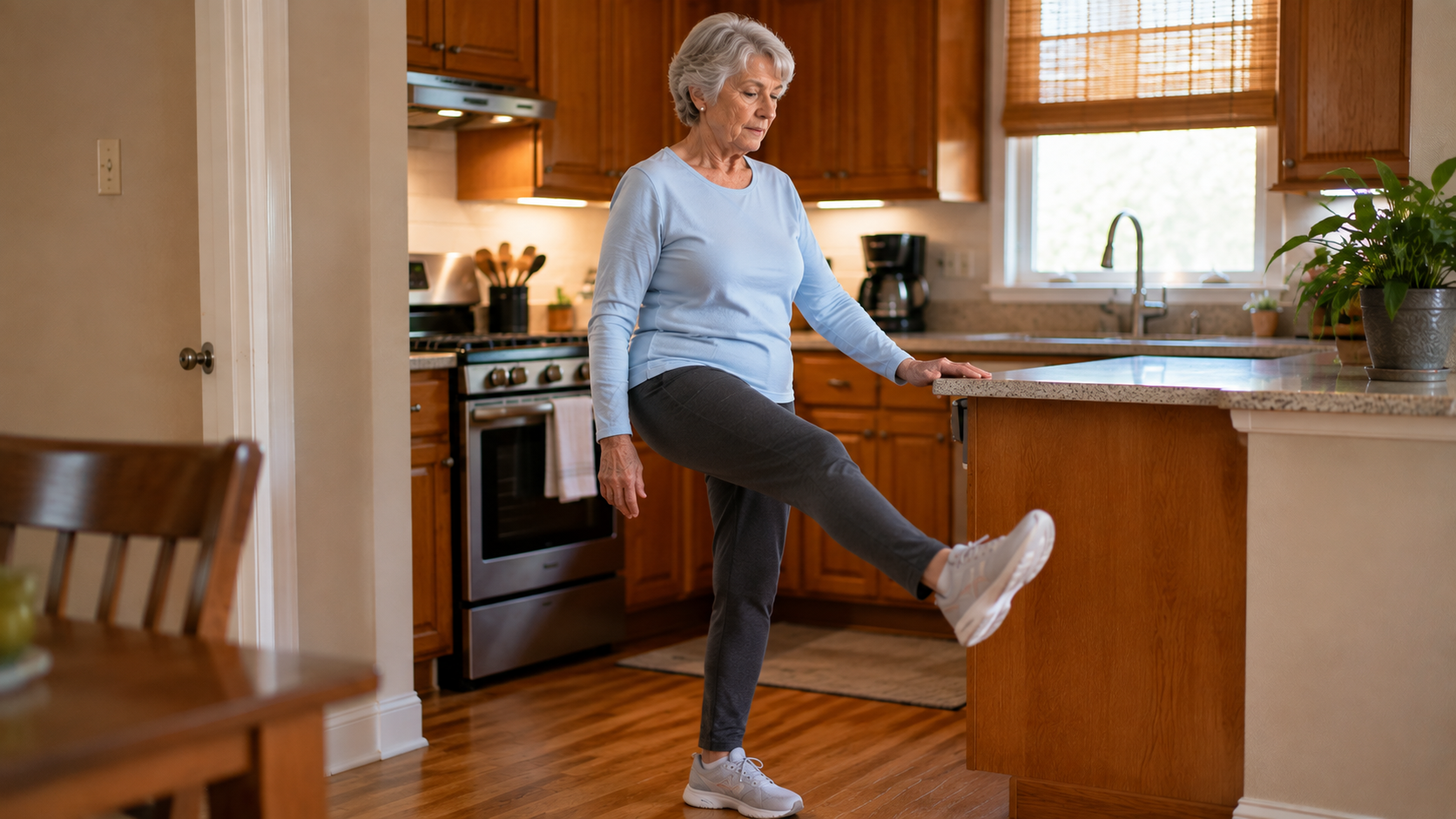
That familiar morning stiffness, the tightness in your shoulders after sitting too long, the feeling that your body just doesn’t move as freely as it used to — a consistent stretching routine for seniors can meaningfully address all of these, without requiring flexibility you don’t currently have or contorting into positions that feel unsafe or unfamiliar.
Having worked with seniors managing a wide range of mobility levels, I’ve seen how much a simple, regular stretching practice can ease daily discomfort and restore a sense of ease in movement that many people assume is permanently gone. Flexibility isn’t something you either have or don’t — it’s a capacity that responds meaningfully to gentle, consistent practice, at any age or starting point.
Why Flexibility Matters More Than Many People Realize
Flexibility often gets treated as a secondary concern behind strength and cardiovascular fitness, but it plays a significant, distinct role in daily comfort and safety that deserves its own dedicated attention. Tight muscles and reduced range of motion contribute to poor posture, increased joint strain, and even altered walking patterns that can raise fall risk. Stiff hips and shoulders make everyday tasks — reaching overhead, turning to check a blind spot while driving, bending to tie shoes — noticeably more difficult and sometimes genuinely uncomfortable.
Regular stretching helps maintain the range of motion needed for these everyday movements, often producing improvements in comfort and ease of movement within just a few weeks of consistent practice, even for those who haven’t stretched intentionally in years or assumed their current stiffness was simply permanent.
How Flexibility Changes With Age, and Why It’s Reversible More Than People Expect
Flexibility naturally declines with age due to changes in connective tissue, reduced water content in tissues, and simply less movement through full ranges of motion as daily activity patterns become more limited. However, research on stretching interventions in older adults consistently shows that flexibility responds meaningfully to regular practice, even after years of reduced mobility.
This is genuinely encouraging news for anyone who assumes their current stiffness represents a permanent, unchangeable state. Muscles and connective tissue retain a real capacity to lengthen and adapt in response to consistent, gentle stretching, regardless of how long it’s been since you last stretched intentionally or how limited your current range of motion feels.
Morning Stiffness Versus Chronic Tightness
It’s worth distinguishing between two related but different experiences: the temporary stiffness many people feel first thing in the morning, and more persistent, chronic tightness that remains throughout the day. Morning stiffness often relates to reduced overnight movement and typically eases within the first hour or so of daily activity, while chronic tightness tends to reflect longer-term patterns of reduced flexibility that benefit specifically from a dedicated, regular stretching practice.
Understanding which pattern you’re experiencing can help set realistic expectations — morning stiffness may simply need a gentle warm-up routine to ease into the day, while chronic tightness benefits more from the consistent, longer-term stretching practice outlined throughout this article.
Neck Rolls for Tension Relief
Tension in the neck and shoulders often builds up gradually from posture habits developed over decades, sometimes without much conscious awareness.
How to do it: Sit or stand with good posture. Slowly drop your chin toward your chest, then gently roll your head to one side, back, to the other side, and forward again, completing a full circle. Move slowly and stop immediately if you feel any sharp pain or dizziness. Complete 3-5 rotations in each direction.
Shoulder Rolls for Upper Back Tension
Rounded shoulders from years of sitting, driving, or reading can create chronic tightness across the upper back and chest.
How to do it: Sit or stand with arms relaxed at your sides. Slowly roll your shoulders up, back, and down in a circular motion, focusing on squeezing your shoulder blades together at the back of each rotation. Complete 10 rotations forward, then 10 rotations backward.
Seated Forward Fold for Lower Back and Hamstrings
Tightness in the lower back and hamstrings often contributes to difficulty bending, reaching, or maintaining comfortable posture while seated.
How to do it: Sit toward the edge of a sturdy chair with feet flat on the floor. Slowly hinge forward from your hips, reaching toward your feet or shins, going only as far as feels comfortable without straining. Hold for 15-20 seconds, breathing normally, then slowly return to an upright position.
Overhead Reach for Shoulder and Side Flexibility
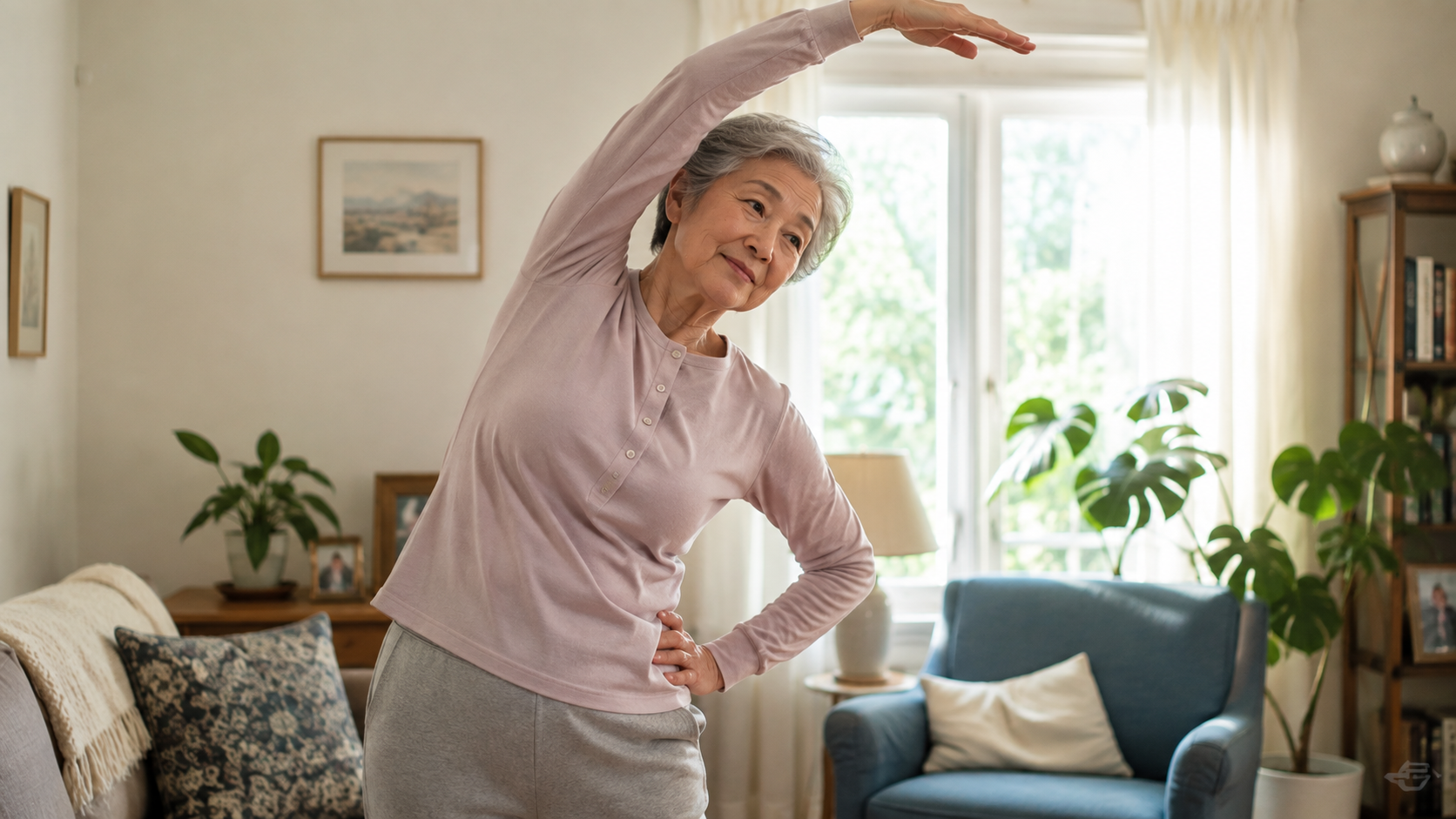
This gentle stretch addresses the shoulder and torso tightness that makes reaching for high shelves or hanging laundry increasingly difficult.
How to do it: Stand or sit with good posture. Raise one arm overhead, then gently lean to the opposite side, feeling a stretch along your raised arm and side of your torso. Hold for 15-20 seconds, then switch sides.
Seated Spinal Twist for Back Mobility
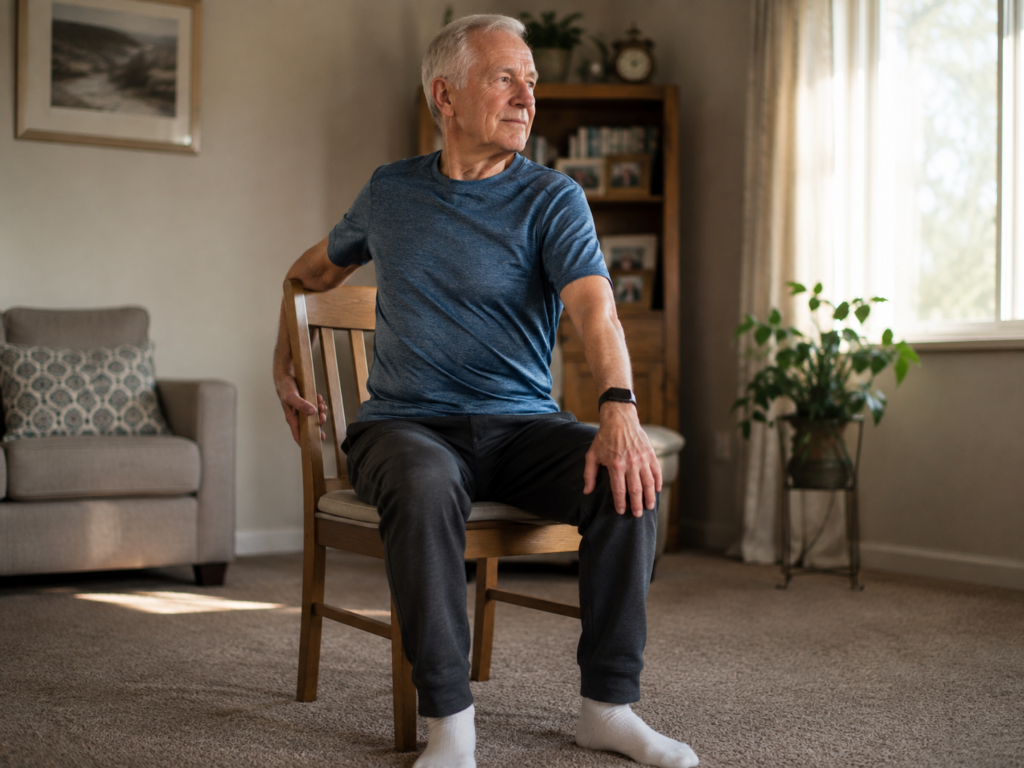
Spinal rotation naturally decreases with age, contributing to difficulty turning to look behind you or reach across your body.
How to do it: Sit with feet flat on the floor and back straight. Place one hand on the opposite knee and gently rotate your torso toward that side, using your other hand on the chair for support. Hold for 15-20 seconds, then repeat on the other side.
Ankle Flexion for Lower Leg Mobility
Ankle stiffness contributes to altered walking patterns and can increase fall risk, particularly on uneven surfaces.
How to do it: Sit with legs extended in front of you. Point your toes forward, then flex them back toward your body, holding each position for a few seconds. Complete 10-12 repetitions.
Chest Opener for Posture Support
Years of forward-leaning activities — reading, using a phone, driving — often tighten the chest muscles, contributing to rounded posture over time.
How to do it: Stand or sit with good posture. Clasp your hands behind your back, gently straightening your arms and lifting your chest slightly. Hold for 15-20 seconds, focusing on opening the chest rather than pulling your arms too far.
Hip Flexor Stretch for Easier Walking
Tight hip flexors, common among those who sit for extended periods, can shorten stride length and contribute to lower back discomfort.
How to do it: Stand near a chair or wall for support. Step one foot slightly back, keeping both feet flat on the floor. Gently shift your weight forward, feeling a stretch in the front of your back hip, without arching your lower back excessively. Hold for 15-20 seconds, then switch sides.
Building a Realistic Stretching Routine
A sustainable approach for most seniors might include:
- Daily, if possible: Neck and shoulder stretches, which can even be done while seated watching television
- 3-4 times per week: A fuller routine covering all areas — neck, shoulders, back, hips, and ankles
- Timing: Many people find stretching feels particularly beneficial first thing in the morning to ease overnight stiffness, or in the evening to release tension accumulated throughout the day
Consistency matters far more than duration — even 5-10 minutes of regular stretching tends to produce more meaningful improvement than occasional longer sessions performed inconsistently.
The Difference Between Stretching and Straining
A common concern among beginners is not knowing how far is too far when stretching. A helpful guideline: you should feel gentle tension or pulling in the muscle being stretched, but never sharp pain, and you should always be able to breathe normally throughout the stretch without holding your breath or tensing up elsewhere in your body. If you find yourself holding your breath or feeling genuine pain rather than mild discomfort, you’ve likely gone further than is currently appropriate for your body.
Flexibility improves gradually over weeks and months of consistent practice — there’s no need to push into uncomfortable ranges to see genuine progress over time, and patience with the process tends to produce better, safer results than rushing toward a specific flexibility goal.
Making Stretching a Habit That Actually Sticks
Many people start a stretching routine with good intentions but struggle to maintain it consistently once initial motivation fades. A few strategies that help build lasting habits include attaching stretching to an existing daily routine — right after brushing your teeth, or during television commercial breaks — rather than treating it as a separate activity requiring its own dedicated time slot.
Keeping expectations realistic also matters considerably. A 5-10 minute routine performed consistently produces far more benefit over months than an ambitious 30-minute routine that feels overwhelming and gets abandoned after a week or two. Starting smaller than feels necessary, and gradually expanding as the habit becomes automatic, tends to produce much better long-term adherence than starting with an intense routine from day one.
Stretching Safely With Existing Joint or Health Conditions
For those managing arthritis, joint replacements, osteoporosis, or other specific conditions, certain stretches may need modification or avoidance entirely. Generally, gentle, slow stretching within a comfortable range is appropriate for most conditions, but it’s worth discussing your specific situation with your doctor or a physical therapist, particularly if you have concerns about a specific joint or recent surgery that might affect which movements are currently safe for you.
Combining Stretching With Strength and Balance Work
Stretching works best as one piece of a complete fitness approach, alongside strength training and balance exercises. Tight, inflexible muscles can limit the effectiveness of strength exercises, while strength work that builds muscle without accompanying flexibility work can sometimes contribute to further tightness over time, creating an imbalance that neither type of exercise alone can fully address.
For a complementary strength routine that pairs well with regular stretching, our article on best exercises for seniors at home covers simple, equipment-free strength exercises that work well alongside the stretches outlined here.
According to the National Institute on Aging, flexibility exercises are one of the four key types of exercise recommended for older adults, alongside endurance, strength, and balance activities, each contributing distinct benefits to overall health and function that the others cannot fully replace on their own.
Frequently Asked Questions
How often should seniors stretch? Daily stretching, even just for a few minutes focused on commonly tight areas like the neck and shoulders, tends to provide the most consistent benefit, though a fuller routine 3-4 times per week is also effective for maintaining overall flexibility.
Is it normal to feel stiff even with regular stretching? Some residual stiffness, particularly first thing in the morning, is common even among those who stretch regularly. Gradual improvement over weeks and months is the realistic expectation, rather than complete elimination of all stiffness, and celebrating incremental progress tends to support more sustainable long-term practice.
Can stretching help with arthritis pain? Many people with arthritis find that gentle, regular stretching helps maintain joint mobility and can reduce stiffness, though it’s worth discussing specific stretches with your doctor, particularly for more severely affected joints, since some movements may need to be modified or approached more gradually than for joints without arthritis involvement.
Should stretching hurt if I’m doing it correctly? No — stretching should produce mild tension or pulling sensation, never sharp pain. If a stretch hurts, ease back to a less intense position and hold there instead, gradually increasing range only as flexibility improves over time and never forcing a position that feels genuinely uncomfortable.
Conclusion
A consistent stretching routine for seniors can meaningfully ease stiffness, improve range of motion, and make everyday movements feel easier and safer, without requiring advanced flexibility or complicated positions. Starting with just a few minutes daily, focusing on commonly tight areas like the neck, shoulders, and hips, can produce noticeable improvement within just a few weeks of consistent practice, regardless of how long it’s been since you last stretched intentionally.
Disclaimer: This article is intended for general informational and educational purposes only and does not constitute medical advice. Please consult your doctor or a physical therapist before beginning any new stretching or exercise routine, especially if you have existing joint conditions or recent injuries.