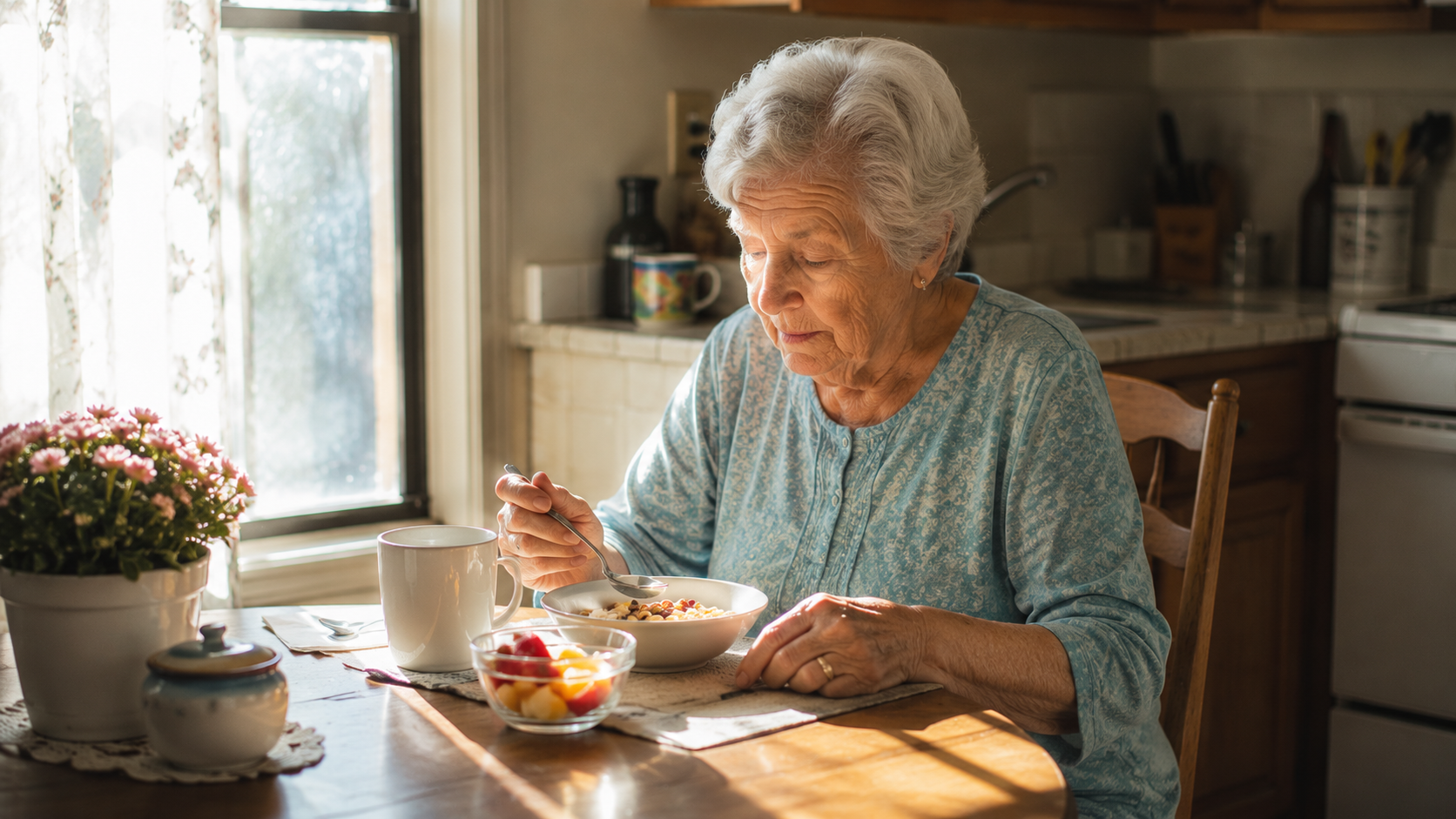
For decades, aging was often treated as a simple, inevitable decline — something to be endured rather than actively shaped. But healthy aging research over the past twenty years has shifted that picture significantly. Scientists now understand that while aging is universal, how well we age is influenced far more by daily habits, environment, and mindset than previously believed, opening up a much more hopeful and actionable way of thinking about the years ahead.
Understanding what science says about healthy aging can feel empowering rather than overwhelming, once you see how much of it comes down to consistent, manageable choices rather than rare genetic luck or circumstances entirely outside your control. As someone who has spent years working directly with seniors, I’ve seen these research findings play out in real life — the people who tend to age most vibrantly aren’t the ones with perfect genetics, but the ones who’ve built supportive habits into their daily routines.
Here’s a closer look at what the research actually shows.
Where Research Is Headed Next
Aging research continues to evolve quickly, with scientists exploring areas such as the gut microbiome’s role in inflammation and immune function, the potential of certain compounds to mimic the cellular benefits of exercise and caloric restriction, and more precise ways to measure “biological age” separate from chronological age. While many of these areas are still in earlier research stages, they reflect a broader shift in how aging is understood — not as a single, uniform process, but as something shaped by many interacting biological systems, many of which respond meaningfully to everyday lifestyle choices.
This evolving research doesn’t change the practical guidance available today, but it does reinforce that the fundamentals — movement, nutrition, sleep, connection, and stress management — sit at the center of nearly every promising area of aging science currently being studied.
Genetics Play a Smaller Role Than Most People Assume
One of the most surprising findings in aging research is just how much control we have over our own aging process. Large-scale twin studies have found that genetics account for roughly 20-30% of how long and how well we age — meaning the majority of the variation comes from lifestyle, environment, and daily habits.
This is genuinely good news. It means that healthy aging isn’t primarily about the genetic hand you were dealt — it’s about the choices available to you every single day. Even individuals with a family history of conditions like heart disease or diabetes can significantly influence their own risk through consistent lifestyle choices, rather than viewing their genetic background as an unchangeable destiny.
Physical Activity Remains One of the Strongest Predictors
Across nearly every major aging study, physical activity consistently emerges as one of the most powerful predictors of healthy aging. Regular movement — even moderate activity like brisk walking — has been linked to reduced risk of heart disease, improved cognitive function, better mood regulation, and significantly lower rates of falls and frailty.
Importantly, research shows that it’s never too late to benefit. Studies of adults who began regular exercise in their 60s, 70s, and even 80s still showed measurable improvements in strength, balance, and cardiovascular health within months of starting.
The Role of Social Connection in Longevity

Perhaps one of the more surprising research findings is how strongly social connection predicts long-term health outcomes. Large longitudinal studies have found that loneliness and social isolation carry health risks comparable to smoking or obesity, contributing to increased rates of heart disease, cognitive decline, and even early mortality.
Conversely, seniors who maintain strong social ties — through family, friendships, community groups, or even regular casual interactions — tend to show better cognitive resilience and lower rates of depression as they age.
Nutrition’s Impact on Cellular Aging
Research into nutrition and aging has increasingly focused on inflammation as a key driver of age-related decline. Diets rich in antioxidants, healthy fats, and fiber — often referred to broadly as anti-inflammatory eating patterns — have been associated with slower cellular aging, better cardiovascular health, and reduced risk of chronic disease.
The Mediterranean diet in particular has been extensively studied and consistently linked to improved longevity markers, likely due to its emphasis on vegetables, healthy fats, lean protein, and minimal processed food.
Sleep Quality and Cognitive Preservation
Sleep research has revealed a strong connection between sleep quality and long-term brain health. During deep sleep stages, the brain actively clears metabolic waste products, including proteins linked to cognitive decline. Poor or fragmented sleep over many years has been associated with increased risk of memory problems and cognitive decline later in life.
This has shifted how healthy aging is approached — sleep is no longer viewed as simply rest, but as an active, protective process worth prioritizing just as much as diet and exercise.
Mental Engagement and Cognitive Reserve
Neuroscientists have introduced the concept of “cognitive reserve” — the brain’s ability to withstand age-related changes without significant functional decline. Research shows that ongoing mental engagement, from learning new skills to maintaining complex social relationships, helps build this reserve over time, potentially delaying the onset of noticeable cognitive symptoms even when underlying brain changes are present.
This helps explain why some individuals with significant brain changes on imaging show few outward symptoms, while others with less severe changes experience more noticeable decline — cognitive reserve, built through a lifetime of engagement, appears to play a meaningful buffering role.
The Importance of Purpose and Mindset
A growing body of research has examined the role of purpose and outlook in healthy aging. Studies have found that individuals who report a strong sense of purpose — whether through family roles, volunteer work, hobbies, or community involvement — tend to show lower rates of disability, better cardiovascular health, and even longer lifespans compared to those without a clear sense of purpose.
This research suggests that healthy aging isn’t purely physical — mindset and a sense of meaning appear to have measurable biological effects as well.
The Emerging Science of Cellular Aging
Beyond lifestyle factors, researchers have also made significant progress in understanding aging at the cellular level. One area of particular interest is telomeres — the protective caps at the ends of chromosomes that naturally shorten over time as cells divide. Shorter telomeres have been associated with increased risk of age-related disease, and research suggests that chronic stress, poor diet, and sedentary behavior may accelerate this shortening process, while regular exercise and stress management may help preserve telomere length.
Another area of active research involves cellular senescence — a process in which aging cells stop dividing but don’t die off properly, instead releasing inflammatory signals that can contribute to tissue damage over time. Scientists are actively studying ways to help the body clear these “zombie cells” more effectively, with some early research suggesting that certain dietary patterns and regular physical activity may support this natural clearance process.
While much of this research is still developing, it reinforces a consistent theme: the daily choices available to nearly everyone — movement, nutrition, stress management, and sleep — appear to influence aging not just in how we feel day to day, but at a fundamental biological level.
How Stress Management Fits Into the Picture
Chronic stress has been increasingly recognized as a significant contributor to accelerated aging. Elevated levels of stress hormones over long periods have been linked to increased inflammation, weakened immune function, and even measurable effects on brain structure over time.
Research into stress management techniques — including mindfulness practices, regular physical activity, and strong social support — consistently shows protective effects against these age-accelerating processes. This doesn’t mean stress can or should be eliminated entirely, but rather that having reliable tools to manage it appears to meaningfully influence long-term health outcomes, adding another layer to the broader picture of what healthy aging actually requires.
Why Population Studies Matter More Than Individual Anecdotes
Much of what’s understood about healthy aging comes from large population studies that follow thousands of people over many years, rather than from individual success stories or anecdotes. This distinction matters, because individual stories — a relative who smoked their whole life and lived to 95, for example — can be misleading if taken as representative of what works generally.
Population-level research allows scientists to identify patterns that hold true across large, diverse groups of people, controlling for other variables that might otherwise explain away individual outcomes. This is why the habits discussed throughout this article — movement, sleep, social connection, nutrition — carry so much scientific weight: they’ve been observed to produce consistent benefits across enormous numbers of people, in many different countries and circumstances, rather than reflecting a single fortunate case.
The Limits of Current Aging Research
It’s worth being honest about what aging science doesn’t yet fully understand. Much of the research on longevity is observational, meaning it identifies strong associations between habits and outcomes without always being able to prove direct cause and effect with complete certainty. Additionally, most large studies have historically included less diversity than would be ideal, meaning some findings may not apply equally across all populations, genetic backgrounds, or cultural contexts.
This doesn’t undermine the overall guidance — the consistency of findings across so many different studies and populations provides real confidence in the broad strokes, even if researchers continue refining the details. It does mean approaching any single, dramatic new headline about aging with some healthy skepticism, since nuanced, well-established findings tend to be more reliable than exciting-sounding preliminary results that haven’t yet been replicated widely.
What This Means for Your Daily Life
Taken together, current research points toward a few consistent, evidence-based priorities for healthy aging:
- Regular physical activity, even moderate amounts, started at any age
- Strong, ongoing social connections
- An anti-inflammatory, nutrient-dense diet
- Consistent, quality sleep
- Ongoing mental engagement and learning
- A clear sense of purpose or meaning
None of these require dramatic life changes — they simply require consistent attention over time. For a practical starting point, our article on 10 daily habits that help you stay healthy after 60 translates much of this research into simple, actionable daily steps.
According to the National Institute on Aging, ongoing research continues to reinforce that lifestyle factors, more than genetics alone, shape the majority of the aging experience.
Frequently Asked Questions
Can healthy habits really reverse the effects of aging? While aging itself can’t be reversed, research shows that healthy habits can significantly slow the rate of age-related decline and, in some cases, improve markers of health that were previously assumed to only worsen with time.
Is it ever too late to benefit from lifestyle changes? No — studies consistently show measurable benefits from improved diet, exercise, sleep, and social connection at any age, including well into a person’s 80s and beyond.
Does genetics matter at all for healthy aging? Genetics play a role, but research suggests they account for a smaller portion of aging outcomes than lifestyle and environmental factors, which offer much more room for individual influence.
What’s the single most impactful habit for healthy aging, according to research? No single habit stands entirely alone, but physical activity and social connection consistently rank among the most strongly supported factors across large-scale studies.
How reliable is aging research compared to other areas of medical science? Aging research draws on some of the largest, longest-running population studies in medical science, which gives real confidence to the broad patterns identified, even as researchers continue refining specific details and mechanisms.
Conclusion
The science on healthy aging offers a genuinely hopeful message: while aging is inevitable, how well we age is shaped far more by daily habits than by genetics alone. Physical activity, social connection, nutrition, sleep, mental engagement, and a sense of purpose all play measurable, evidence-backed roles — and it’s never too late to start building them into your life, regardless of your starting point or past habits.
Disclaimer: This article is intended for general informational and educational purposes only and does not constitute medical advice. Please consult your doctor before making significant changes to your diet, exercise routine, or lifestyle, especially if you have existing health conditions.