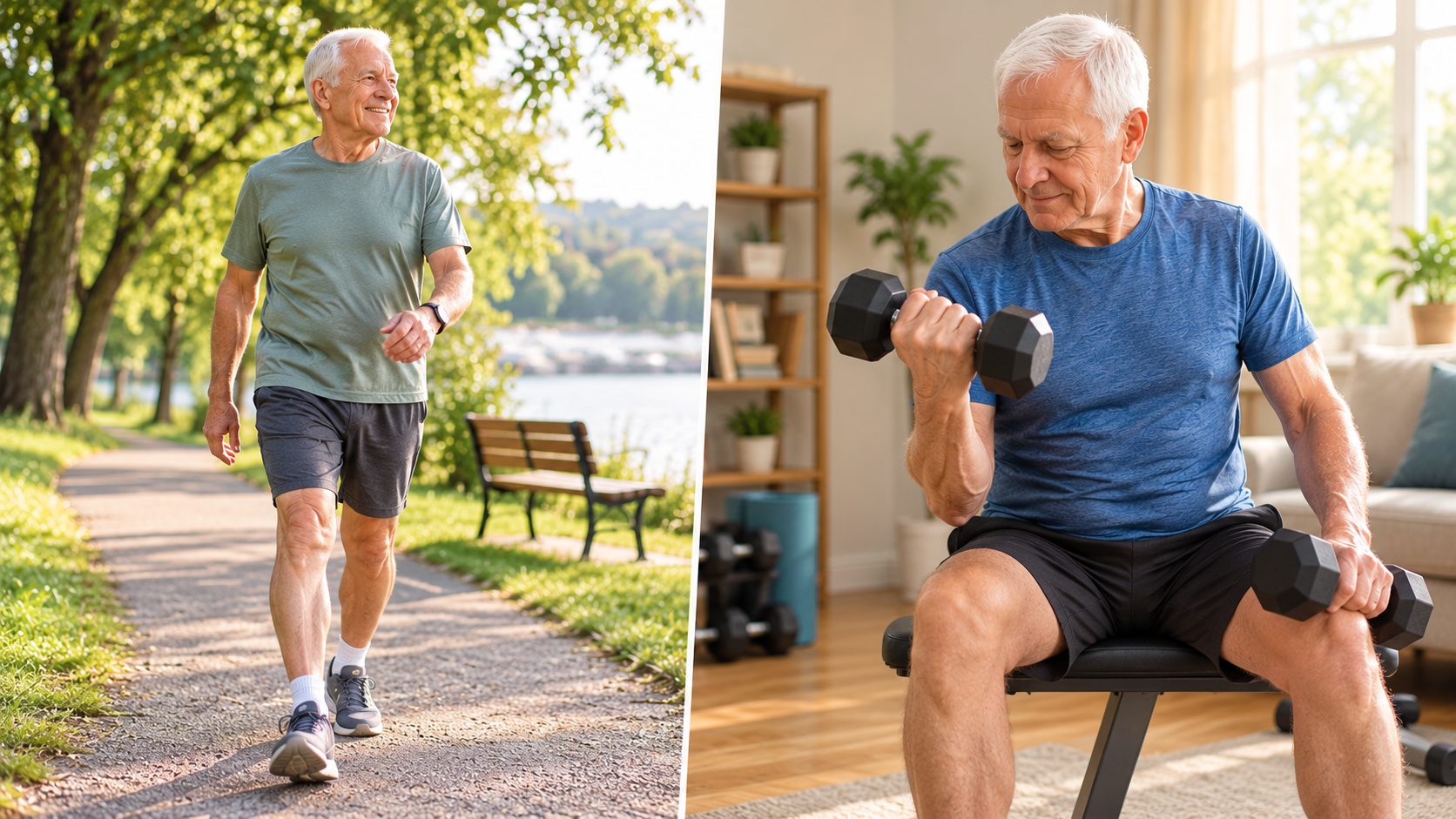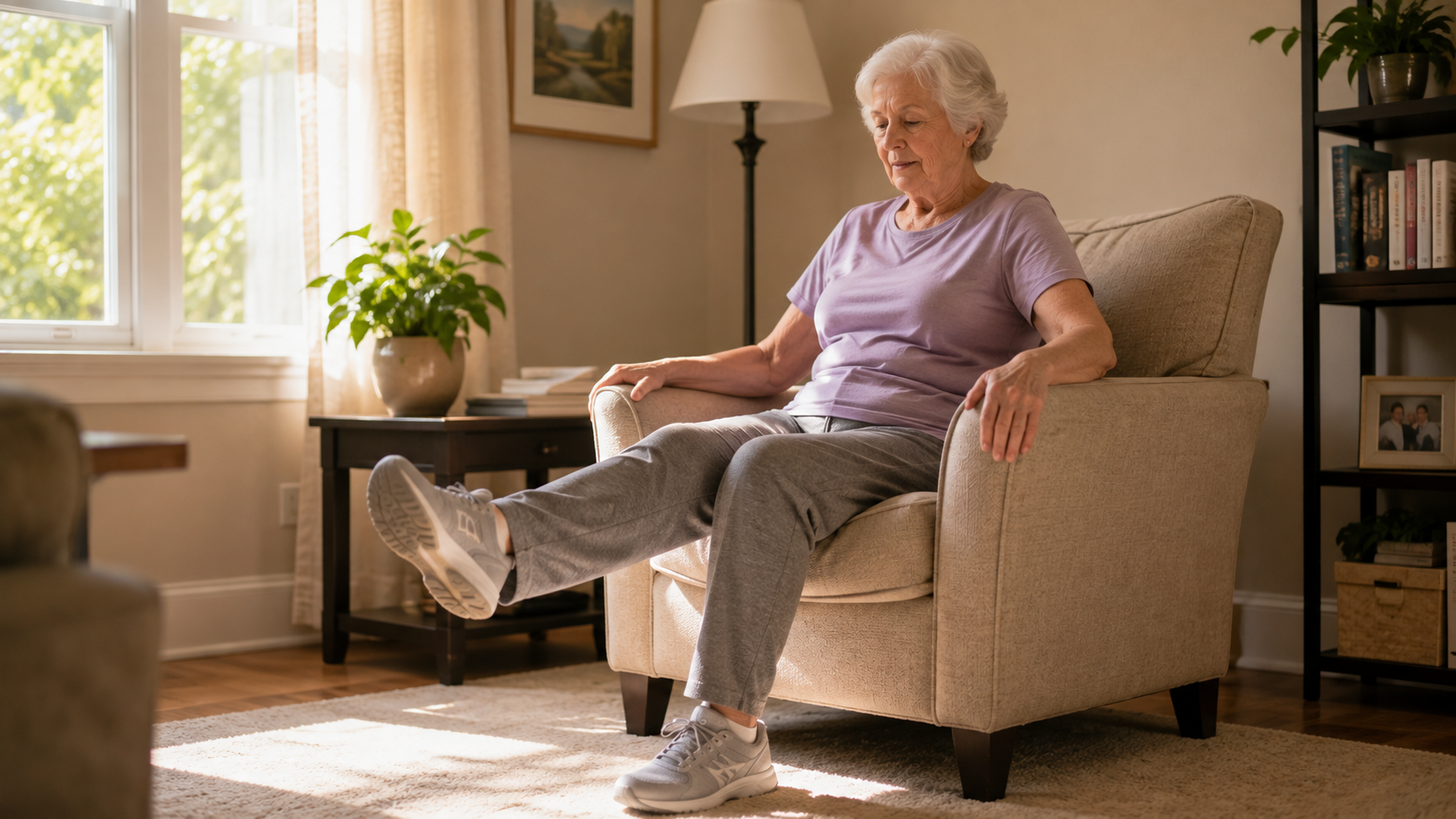
Staying active doesn’t require a gym membership, expensive equipment, or a complicated routine. Some of the best exercises for seniors at home are also the simplest — movements that build strength, improve balance, and support independence using nothing more than your own body weight and a sturdy chair, making them accessible regardless of budget or fitness background.
Having worked with seniors across a wide range of mobility levels, I’ve seen how much a consistent, simple home routine can improve confidence and daily function, often more than an intimidating gym program that gets abandoned after a few weeks due to unfamiliarity or discomfort. Here’s a realistic, safe set of exercises you can start today, regardless of your current fitness level.
Why Home Exercise Works So Well for Seniors
Exercising at home removes several common barriers — transportation to a gym, unfamiliar equipment, self-consciousness around younger, more experienced gym-goers, and the cost of a membership. It also allows exercises to be done at your own pace, with familiar surroundings and furniture available for support and balance if needed.
Research consistently shows that even simple, unsupervised home exercise, done consistently, produces meaningful improvements in strength, balance, and overall function — the key factor is consistency, not the sophistication of the equipment or setting, which is genuinely good news for anyone worried they need a gym membership or expensive gear to get started.
Chair Squats for Leg Strength
Standing up from a seated position uses several major muscle groups and is one of the most functional exercises you can practice, since it directly mirrors an action you perform dozens of times each day.
How to do it: Sit toward the front of a sturdy chair with feet flat on the floor, shoulder-width apart. Lean slightly forward and push through your heels to stand up fully, then slowly lower back down with control. Start with 8-10 repetitions, using the chair arms for support if needed, and gradually reduce reliance on your hands as strength improves.
Wall Push-Ups for Upper Body Strength
Traditional push-ups can be too demanding for many seniors just starting out, but wall push-ups provide similar benefits with significantly less strain on joints.
How to do it: Stand facing a wall, arms extended at shoulder height, palms flat against the wall slightly wider than shoulder width. Bend your elbows to bring your chest toward the wall, then push back to the starting position. Aim for 10-15 repetitions, adjusting your distance from the wall to make it easier or more challenging.
Seated Marching for Cardiovascular Health
This gentle exercise gets your heart rate up without any impact on joints, making it ideal for seniors with arthritis or joint pain.
How to do it: Sit in a sturdy chair with good posture, and lift one knee toward your chest, then lower it and lift the other. Continue alternating for 30-60 seconds, swinging your arms naturally as if marching, to also engage your upper body and core.
Heel-to-Toe Walk for Balance
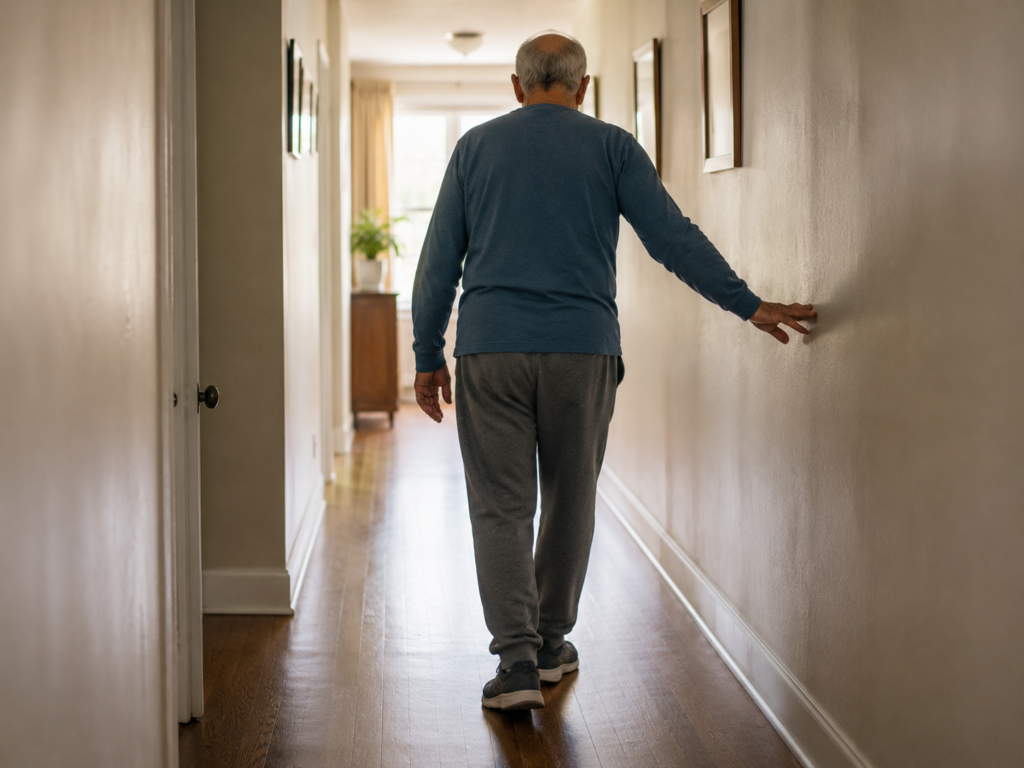
Balance exercises are particularly important for fall prevention, and this simple movement can be practiced almost anywhere in your home.
How to do it: Stand near a wall or counter for support if needed. Walk in a straight line, placing the heel of one foot directly in front of the toes of the other with each step, as if walking a tightrope. Practice for 10-15 steps, using the wall for support as needed until balance improves.
Standing Leg Raises for Hip Strength
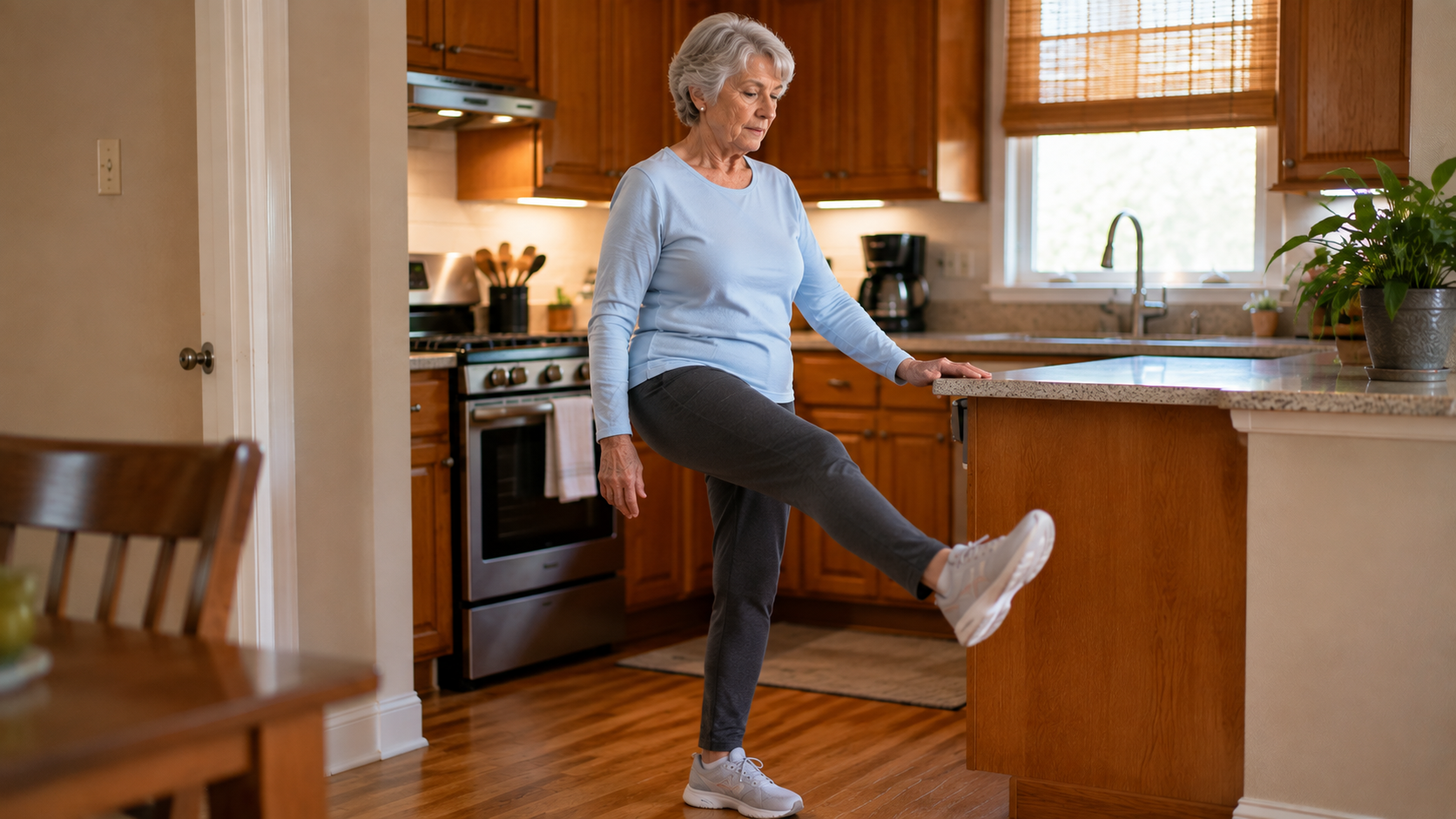
Strong hip muscles play a significant role in balance and mobility, supporting everything from walking to climbing stairs safely.
How to do it: Stand behind a sturdy chair, holding the back for support. Slowly lift one leg straight out to the side, keeping your body upright, then lower it back down with control. Perform 10-12 repetitions on each side, focusing on slow, controlled movement rather than height or speed.
Seated Arm Circles for Shoulder Mobility
Shoulder mobility often declines gradually with age, affecting everything from reaching overhead shelves to getting dressed comfortably.
How to do it: Sit or stand with arms extended out to the sides at shoulder height. Make small circles forward for 15-20 seconds, then reverse direction for another 15-20 seconds. Gradually increase circle size as comfort and mobility improve.
Toe Raises for Ankle Strength and Balance
Ankle strength plays a significant, often overlooked role in balance and fall prevention, particularly on uneven surfaces.
How to do it: Stand behind a sturdy chair for support. Rise up onto your toes, hold briefly, then lower back down with control. Perform 10-15 repetitions, gradually reducing reliance on the chair for support as strength and balance improve.
Seated Torso Twists for Core Strength
A strong core supports better posture, balance, and overall functional movement throughout daily activities.
How to do it: Sit in a sturdy chair with feet flat on the floor. Cross your arms over your chest and gently rotate your upper body to one side, then the other, keeping your hips facing forward. Perform 10-12 rotations on each side, moving slowly and with control rather than momentum.
Tracking Progress Without a Gym or Trainer
One challenge of exercising at home, without a trainer or gym environment, is knowing whether you’re actually making progress over time. A few simple ways to track improvement include noting how many repetitions you can complete with good form before fatigue sets in, timing how long you can hold a balance position like standing on one foot, and paying attention to how everyday tasks feel — climbing stairs, carrying groceries, getting up from a low chair.
Keeping a simple log, even just a few notes in a notebook or phone app, can provide real motivation by making gradual progress visible, which is often harder to notice day to day than it is when looking back over several weeks or months of consistent practice.
Combining Strength, Balance, and Flexibility for Complete Fitness
While the exercises outlined above cover strength and balance well, flexibility is an equally important, often overlooked component of a complete home fitness routine. Gentle stretching — reaching for your toes while seated, gentle neck rolls, or simple shoulder stretches — helps maintain range of motion and can reduce stiffness, particularly first thing in the morning or after periods of prolonged sitting.
A well-rounded routine ideally touches on all three areas — strength, balance, and flexibility — over the course of a week, rather than focusing exclusively on just one. This combination tends to produce more complete functional benefits than any single type of exercise practiced in isolation, supporting a wider range of daily activities and reducing the risk of injury from unaddressed stiffness or imbalance.
Building a Realistic Weekly Routine
Rather than attempting all of these exercises daily, a realistic approach might look like:
- 3 days per week: A full routine covering strength (chair squats, wall push-ups, standing leg raises), balance (heel-to-toe walk, toe raises), and core (seated torso twists)
- Daily, if desired: Gentle movements like seated marching or arm circles, which are low-impact enough to do more frequently
- Rest days: Allowing muscles to recover, particularly important if starting a new strength routine after a period of inactivity
Starting with fewer repetitions than suggested and gradually increasing over several weeks tends to build sustainable habits far more successfully than starting too intensely and quitting from soreness or discouragement.
Staying Motivated When Progress Feels Slow
It’s common to feel discouraged if strength or balance improvements don’t feel dramatic week to week, particularly compared to the more visible progress often associated with younger fitness journeys. It’s worth remembering that for seniors, the goal isn’t necessarily visible muscle change — it’s functional improvement: an easier time rising from a chair, more confidence walking on uneven ground, less fatigue during daily errands.
These functional wins often happen gradually and subtly, which is why tracking specific, concrete markers — rather than relying purely on how you feel in the moment — tends to reveal genuine progress that might otherwise go unnoticed day to day.
Safety Considerations Before You Begin
A few important safety notes apply to any home exercise routine:
- Always have a sturdy chair or wall nearby for balance support, particularly for standing exercises
- Wear supportive, non-slip footwear rather than exercising in socks or slippers
- Stop any exercise that causes sharp pain, and distinguish this from the normal, milder discomfort of muscle effort
- Keep the exercise area free of rugs, cords, or other tripping hazards
- Stay hydrated, particularly during longer or warmer sessions
If you have existing health conditions, joint replacements, or significant mobility limitations, it’s worth discussing this routine with your doctor or a physical therapist before starting, to ensure it’s appropriately tailored to your specific situation.
Adapting Exercises for Different Ability Levels
For those with significant mobility limitations: Many of these exercises can be modified to be done entirely from a seated position, focusing on upper body and core movements first before gradually introducing standing balance work with substantial support, ideally alongside guidance from a physical therapist familiar with your specific limitations.
For those recovering from illness or surgery: Starting with just one or two exercises, at very low repetitions, and gradually building back up tends to be safer and more sustainable than attempting a full routine too soon after a setback.
For those who are already quite active: These exercises can serve as a helpful warm-up or supplement to a more advanced routine, or repetitions and hold times can be increased to provide additional challenge.
For a broader look at how movement fits into overall healthy aging, our article on 10 daily habits that help you stay healthy after 60 covers additional areas that work alongside a regular exercise routine.
According to the National Institute on Aging, older adults benefit significantly from a combination of strength, balance, and flexibility exercises, and even modest, consistent home-based routines can meaningfully reduce fall risk and support long-term independence, regardless of whether they’re supplemented by additional gym-based or supervised programs.
Frequently Asked Questions
How often should seniors exercise at home? Most guidelines suggest aiming for strength and balance exercises at least 2-3 times per week, with gentler movement like walking or seated marching encouraged more frequently, even daily if comfortable, since low-impact movement carries minimal risk of overtraining or injury.
Do I need any equipment for these exercises? No — all of the exercises described here require only a sturdy chair or wall for support, making them accessible without any special equipment or financial investment, which removes one of the biggest barriers many seniors face when considering a new fitness routine.
What if I have arthritis or joint pain? Many of these exercises, particularly the seated and low-impact options, are generally well-suited for those with arthritis, though it’s worth checking with your doctor about which specific movements are best for your particular joints and condition, as some modifications may be needed depending on which joints are most affected and how severe your symptoms currently are.
How long before I notice improvements in strength or balance? Many people notice modest improvements in balance and confidence within 4-6 weeks of consistent practice, with more significant strength gains typically becoming noticeable over 8-12 weeks of regular exercise, though individual results vary based on starting fitness level and consistency.
Conclusion
The best exercises for seniors at home don’t require special equipment or complicated routines — just consistent practice of simple, functional movements like chair squats, wall push-ups, and balance exercises. Starting small, prioritizing safety, and building gradually over time can meaningfully improve strength, balance, and confidence, supporting greater independence for years to come, regardless of your current fitness level or how long it’s been since you’ve exercised regularly.
Disclaimer: This article is intended for general informational and educational purposes only and does not constitute medical advice. Please consult your doctor or a physical therapist before beginning any new exercise routine, especially if you have existing health conditions or mobility limitations.