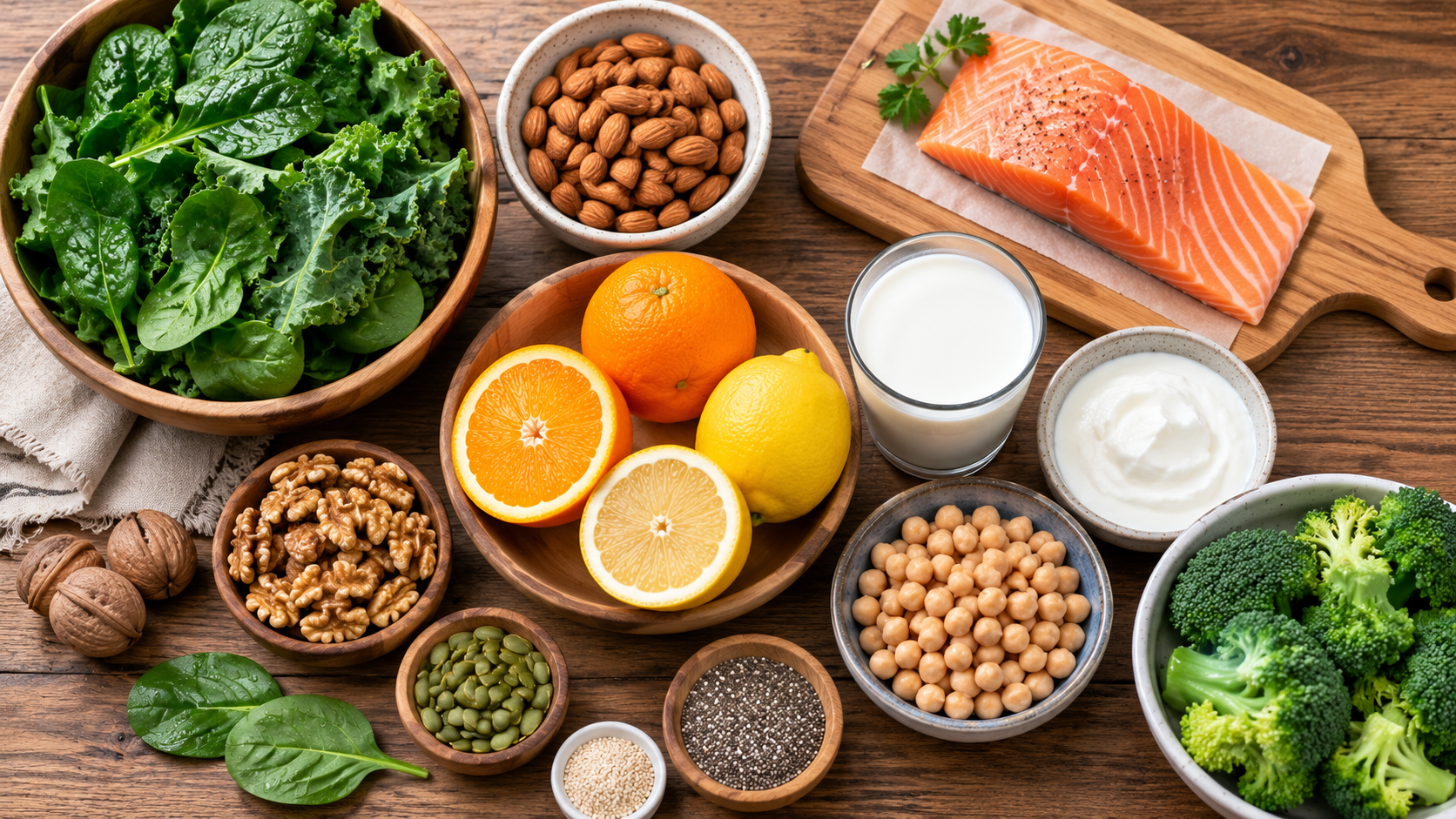
When people think about bone health, calcium usually comes to mind first — and rightfully so. But genuinely strong, resilient bones depend on a broader combination of nutrients working together, meaning foods that support healthy bones extend well beyond calcium-rich choices alone. Understanding this fuller nutritional picture can help you build bone-supporting habits that address the whole system, not just one isolated piece of it.
Having worked with seniors managing bone density concerns, I want to walk through the complete range of nutrients your bones actually depend on, and the foods that deliver them, so you can build genuinely comprehensive bone-supporting nutrition rather than a narrow, calcium-only focus.
Why Bones Need More Than Just Calcium
Bone tissue is a living, dynamic structure made up of a protein matrix (primarily collagen) mineralized with calcium and phosphorus, all maintained through an ongoing remodeling process that depends on numerous vitamins and minerals working together. Calcium provides the mineral density, but without adequate protein for the structural matrix, vitamin D for calcium absorption, vitamin K for directing calcium appropriately into bone, and magnesium for supporting the overall mineralization process, calcium alone can’t build or maintain genuinely strong bones.
This explains why a diet narrowly focused on calcium, while ignoring these complementary nutrients, often falls short of providing complete bone-supporting nutrition, even when calcium intake itself looks adequate on paper.
How Bone Remodeling Actually Works
Understanding the basic biology of bone remodeling helps explain why so many different nutrients matter for bone health. Bones aren’t static structures — they undergo continuous remodeling throughout life, with specialized cells called osteoclasts breaking down old bone tissue while osteoblasts build new bone tissue to replace it. This ongoing cycle depends on adequate raw materials (protein, calcium, and other minerals) and the various vitamins that regulate and direct this process appropriately.
In younger adulthood, bone building generally keeps pace with or exceeds bone breakdown, leading to increasing bone density until reaching peak bone mass, typically in your late 20s or early 30s. After this point, the balance gradually shifts, with breakdown beginning to modestly exceed building, leading to the slow, ongoing decline in bone density that continues throughout the remainder of life. Nutrition doesn’t stop this fundamental aging process entirely, but it can meaningfully influence the pace of this decline and support the remodeling process functioning as effectively as possible throughout the years ahead.
Why a Food-First Approach Often Outperforms Supplements Alone
While supplements can play an important role, particularly for specific identified deficiencies, research increasingly suggests that whole foods often provide more comprehensive bone-health benefit than isolated nutrient supplements alone. This may relate to the complex interactions between multiple nutrients found together in whole foods, working synergistically in ways that isolated supplements can’t fully replicate, along with the additional beneficial compounds present in whole foods that go beyond the specific vitamin or mineral being targeted through supplementation.
This doesn’t mean supplements are never appropriate — they clearly matter for addressing specific, identified deficiencies, particularly for nutrients like vitamin D that are difficult to obtain in adequate amounts through diet and sun exposure alone. But it does reinforce why building your bone-health strategy around genuinely varied, whole-food-based nutrition, with supplements filling specific identified gaps rather than serving as the primary strategy, tends to produce the most comprehensive results.
Protein for the Structural Bone Matrix
Bone tissue is roughly half protein by volume, primarily in the form of collagen, which provides the flexible structural framework that calcium and other minerals attach to. Adequate protein intake directly supports this structural component, working alongside calcium rather than competing with it.
Foods to prioritize: Fish, poultry, eggs, dairy, and legumes all provide the protein needed to support this structural bone matrix, making adequate protein intake just as relevant to bone health as calcium itself.
Vitamin K for Directing Calcium Appropriately
Vitamin K activates specific proteins involved in bone mineralization, essentially helping direct calcium into bone tissue where it belongs, rather than allowing it to accumulate elsewhere in the body, like blood vessels, where it can actually cause harm.
Foods to prioritize: Leafy greens like kale, spinach, and collard greens provide substantial vitamin K, making them relevant to bone health through this specific mechanism, beyond their more commonly discussed calcium content.
Magnesium for Bone Mineral Structure
Magnesium plays a direct structural role in bone mineral composition, and also supports the conversion of vitamin D into its active form, meaning inadequate magnesium can undermine bone health even when calcium and vitamin D intake seem otherwise adequate.
Foods to prioritize: Nuts, seeds, whole grains, and leafy greens all provide meaningful magnesium, supporting this often-overlooked component of comprehensive bone health.
Vitamin D for Calcium Absorption
Without adequate vitamin D, the body cannot effectively absorb calcium from the digestive tract, regardless of how much calcium-rich food you consume, making vitamin D arguably as important as calcium itself for genuine bone health.
Foods to prioritize: Fatty fish, egg yolks, and fortified foods provide dietary vitamin D, though many people, particularly older adults, require supplementation to reach adequate levels given the limited number of foods that naturally contain significant vitamin D.
Calcium as the Mineral Foundation
Despite the importance of these complementary nutrients, calcium remains genuinely essential, providing the primary mineral density that gives bones their strength and rigidity.
Foods to prioritize: Dairy products, fortified plant milks, leafy greens, and canned fish with edible bones all provide meaningful calcium, working alongside the other nutrients discussed throughout this article for comprehensive bone support.
Vitamin C for Collagen Production

Vitamin C plays an essential role in collagen synthesis, directly supporting the protein matrix that forms bone’s structural framework, connecting this vitamin to bone health in a way that’s less commonly discussed than its more familiar immune-supporting reputation.
Foods to prioritize: Citrus fruits, bell peppers, strawberries, and broccoli all provide substantial vitamin C, supporting collagen production alongside their other, more commonly recognized health benefits.
Potassium for Reducing Calcium Loss
Potassium appears to help reduce calcium loss through urine, potentially helping preserve bone density by keeping more calcium available for bone maintenance rather than being excreted.
Foods to prioritize: Bananas, potatoes, leafy greens, and beans all provide meaningful potassium, adding another supportive nutrient to a comprehensive bone-health-focused eating pattern.
Omega-3 Fatty Acids for Reducing Bone-Damaging Inflammation
Chronic inflammation has been linked to increased bone breakdown, making the anti-inflammatory properties of omega-3 fatty acids relevant to bone health, beyond their more commonly discussed cardiovascular and cognitive benefits.
Foods to prioritize: Fatty fish, walnuts, and flaxseeds provide omega-3s, offering yet another pathway through which whole, nutrient-dense foods support comprehensive bone health.
Practical Meal Ideas That Naturally Incorporate These Nutrients
Rather than tracking each individual nutrient discussed throughout this article, thinking in terms of complete, varied meals naturally incorporates most of them simultaneously. A meal featuring grilled salmon (protein, vitamin D, omega-3s), a large salad with leafy greens (vitamin K, calcium, magnesium) and citrus vinaigrette (vitamin C), alongside a small portion of nuts (magnesium, protein) provides a genuinely comprehensive bone-supporting meal without requiring you to consciously check off each individual nutrient category.
This kind of naturally varied, whole-food-based approach to meal planning tends to be both more sustainable and more effective than an overly analytical approach focused on hitting specific numerical targets for each individual nutrient, which can feel overwhelming and difficult to maintain as an ongoing daily practice.
Building a Truly Comprehensive Bone-Supporting Diet
Rather than focusing narrowly on calcium supplements or calcium-fortified foods alone, a genuinely comprehensive approach incorporates protein, vitamin K, magnesium, vitamin D, vitamin C, and potassium alongside calcium, which in practice looks like a varied, whole-food-based diet rather than a narrow focus on any single nutrient or food category.
This might mean building meals around a combination of lean protein, leafy greens, whole grains, and a variety of colorful fruits and vegetables, naturally incorporating most of the nutrients discussed throughout this article without requiring you to track each one individually.
Considering Your Individual Bone Health Picture
While the general principles discussed throughout this article apply broadly, individual factors — existing bone density, family history, medications, and specific health conditions — meaningfully affect how these recommendations should be prioritized for your particular situation. Someone with diagnosed osteoporosis may need more aggressive attention to these nutrients, potentially alongside medication, compared to someone with normal bone density simply looking to maintain their current status through proactive nutrition.
Discussing your specific bone density results, if you’ve had a DEXA scan, with your doctor or a registered dietitian can help translate the general principles discussed throughout this article into a more personalized approach, tailored to your individual risk factors and current bone health status rather than a generic, one-size-fits-all recommendation.
Foods and Habits That Can Undermine Bone Health
Alongside adding bone-supporting foods, certain dietary and lifestyle patterns appear to undermine bone health, including excessive sodium intake (which increases calcium loss through urine), excessive caffeine or alcohol consumption, and smoking, which directly interferes with bone-building processes. Moderating these factors, alongside actively incorporating bone-supporting nutrients, provides a more complete strategy than focusing exclusively on addition without also addressing these potentially undermining patterns.
For a more calcium-specific deep dive, our article on calcium-rich foods for bone health covers additional detail on calcium sources and absorption specifically, complementing this broader nutritional overview.
According to the National Institute on Aging, a varied diet incorporating adequate calcium, vitamin D, protein, and other bone-supporting nutrients, combined with weight-bearing exercise, provides the most comprehensive approach to maintaining bone density throughout aging.
Frequently Asked Questions
Is it possible to get too much of any of these bone-supporting nutrients through food? Excessive intake through whole foods alone is uncommon for most of these nutrients, though supplementation, particularly of calcium or vitamin D, should generally be guided by your doctor based on your individual needs and blood test results.
Do I need to track every single nutrient discussed in this article? Not necessarily — focusing on a generally varied, whole-food-based diet naturally incorporates most of these nutrients without requiring detailed tracking of each individual component.
Which nutrient deficiency is most commonly overlooked for bone health? Vitamin K and magnesium tend to receive less attention than calcium and vitamin D, despite playing genuinely important roles in bone health, making them worth specific attention given how commonly they’re overlooked in typical bone-health discussions.
Can this comprehensive approach help even after an osteoporosis diagnosis? Yes — while comprehensive nutrition alone may not fully reverse significant bone loss, it supports whatever bone density remains and works alongside appropriate medical treatment, which your doctor can help coordinate based on your specific diagnosis, medications, and individual bone density results.
Conclusion
Foods that support healthy bones extend well beyond calcium alone, encompassing protein, vitamin K, magnesium, vitamin D, vitamin C, and potassium, all working together to support the complete bone-building and maintenance process. Building a genuinely varied, whole-food-based diet offers more comprehensive bone protection than a narrow focus on calcium in isolation from these equally important complementary nutrients.
Making Bone-Supporting Nutrition Feel Achievable
Reading through this many nutrients might feel overwhelming at first glance, but the good news is that most people already eat several bone-supporting foods regularly without necessarily thinking of them in these specific terms. Rather than starting from scratch, it can help to first take stock of what you’re already eating that genuinely supports bone health, then look for a few realistic additions or substitutions to fill in genuine gaps, rather than attempting a complete dietary overhaul all at once.
This kind of building-on-what-already-works approach tends to feel considerably more manageable and sustainable than starting entirely from zero, and often reveals that you’re closer to comprehensive bone-supporting nutrition than the extensive list of nutrients discussed throughout this article might initially suggest.
Thinking of Bone Health as a Whole-Diet Commitment
Rather than treating bone health as a narrow, isolated nutritional concern requiring specific supplements or fortified products, viewing it as one more genuine benefit of an overall varied, nutrient-dense diet tends to produce more sustainable, comprehensive results. The same foods that support your heart, brain, and muscles largely overlap with those that support your bones, meaning a generally healthy, varied diet naturally provides much of what your skeletal system needs without requiring an entirely separate nutritional strategy.
Disclaimer: This article is intended for general informational and educational purposes only and does not constitute medical or nutritional advice. Please consult your doctor or a registered dietitian regarding your specific bone health needs, especially if you have diagnosed osteoporosis or osteopenia.