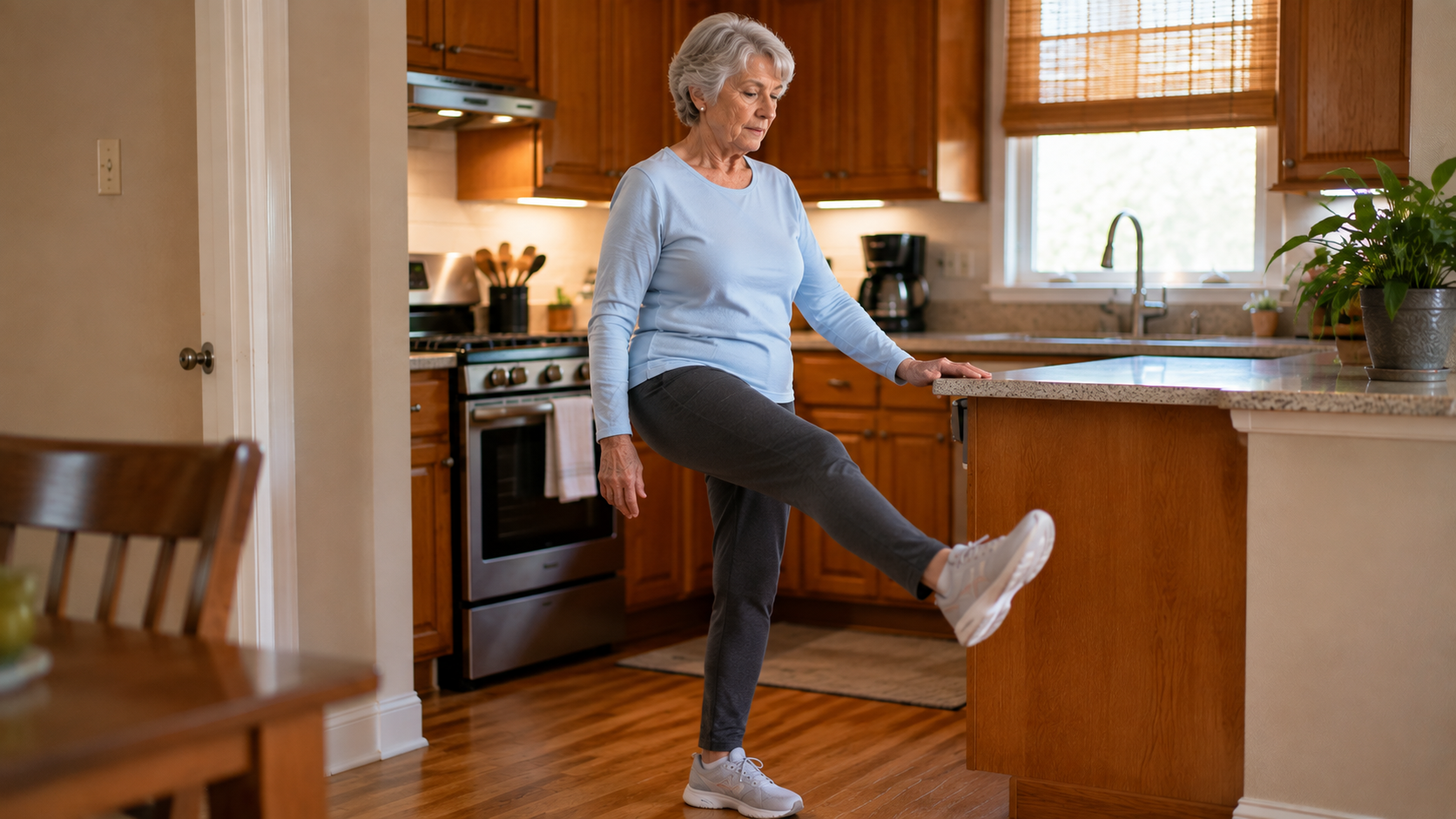
It’s one of the most common questions in senior fitness: should you focus on walking, or is strength training actually more important? The honest answer, when it comes to walking vs strength training for seniors, is that both play distinct, complementary roles — and choosing only one leaves meaningful health benefits on the table that the other type of exercise simply cannot provide.
Having worked with seniors across a wide range of fitness backgrounds, I’ve seen the confusion this question creates firsthand. Many people assume walking alone is “enough” exercise, while others focus entirely on strength and neglect cardiovascular movement. Understanding what each actually does for your body can help you build a routine that gets the real benefits of both, rather than picking one at the expense of the other and missing out on genuinely important protective effects.
What Walking Does Especially Well
Walking is often the most accessible form of exercise for seniors, requiring no equipment, no gym membership, and minimal risk of injury when done at a comfortable pace. Its primary benefits center on cardiovascular health, offering measurable improvements in heart function, blood pressure regulation, and circulation, particularly when done consistently over weeks and months.
Walking also supports joint health in ways that surprise many people — rather than wearing down joints, regular low-impact movement like walking helps lubricate joints and maintain range of motion, often reducing stiffness rather than causing it. Additionally, walking outdoors offers mental health benefits through natural light exposure and, when done with others, meaningful social connection.
Research has consistently linked regular walking to reduced risk of heart disease, improved mood, better blood sugar regulation, and even modest cognitive benefits, making it one of the most evidence-supported forms of exercise available at virtually any fitness level.
What Strength Training Does That Walking Can’t
While walking excels at cardiovascular benefits, it does relatively little to address one of the most significant challenges of aging: the gradual loss of muscle mass, known as sarcopenia. This process begins as early as your 30s and accelerates notably after 60, contributing to reduced strength, slower metabolism, and increased frailty over time.
Strength training directly counteracts this decline by stimulating muscle growth and preservation, which supports everything from the ability to rise from a chair unassisted to maintaining bone density, which also naturally declines with age. Unlike walking, strength training provides resistance significant enough to trigger genuine muscle-building adaptations, something that walking, regardless of distance or duration, generally cannot replicate.
Research has shown that strength training in older adults can meaningfully improve functional independence, reduce fall risk through improved muscle support around joints, and even help manage chronic conditions like type 2 diabetes by improving how muscles process blood sugar.
Why This Isn’t Really an Either-Or Question
Framing walking and strength training as competitors misses the point that they address fundamentally different physiological needs. Walking primarily trains your cardiovascular system, while strength training primarily addresses muscular and skeletal health. A body that’s only walking may have a strong heart but weakening muscles and bones. A body that only strength trains may have good muscle tone but miss out on cardiovascular conditioning and the mental health benefits associated with regular walking outdoors.
Major health organizations, including guidance reflected by the National Institute on Aging, generally recommend a combination approach — regular aerobic activity like walking, alongside strength training at least two to three times per week — rather than choosing one form of exercise exclusively.
Building a Combined Routine That Actually Works

A realistic weekly approach for most seniors might look like:
- 4-5 days per week: A 20-30 minute walk, at a pace that feels moderately challenging but sustainable
- 2-3 days per week: A simple strength routine covering major muscle groups — legs, arms, core, and back
- Rest or gentle stretching: On remaining days, allowing muscles adequate recovery time between strength sessions
This doesn’t require lengthy daily commitments. Even 20-30 minutes per session, spread across the week, produces meaningful benefits when done consistently over months, which matters far more than any single intense workout or an occasional burst of ambitious effort followed by weeks of inactivity.
Signs You May Be Overemphasizing One Over the Other
If you’re walking regularly but skipping strength training entirely: Watch for signs like difficulty rising from low chairs without using your arms, reduced grip strength when opening jars, or a general sense of weakening over time despite maintaining your walking routine.
If you’re strength training but neglecting cardiovascular activity: Watch for reduced stamina during everyday activities, feeling more winded than expected during light exertion, or missing out on the mood and cognitive benefits specifically associated with aerobic exercise like walking.
Either pattern suggests it’s worth rebalancing your routine to include both forms of movement, rather than continuing to focus exclusively on the one that feels more comfortable or familiar.
Starting Strength Training If You’ve Only Ever Walked
For those who have relied primarily on walking, introducing strength training doesn’t need to feel intimidating or require a gym. Simple bodyweight exercises — chair squats, wall push-ups, standing leg raises — provide genuine strength benefits without any equipment, and can be introduced gradually alongside an existing walking routine rather than replacing it entirely or all at once.
Starting with just one or two strength sessions per week, focusing on major muscle groups, and gradually increasing repetitions or resistance over time tends to build sustainable habits far more successfully than attempting an intense program from the outset.
Adding Walking If You’ve Only Ever Strength Trained
For those who have focused primarily on strength training, adding regular walking is equally straightforward. Starting with short 10-15 minute walks, gradually extending duration as stamina builds, and choosing a comfortable, consistent time of day — like right after breakfast — can help establish walking as a sustainable habit alongside existing strength work, without requiring a complete restructuring of your current routine.
Combining the two need not mean doubling your total exercise time dramatically. Many seniors find that a short walk before or after a strength session fits naturally into an existing routine, without requiring significant additional time investment or a complete overhaul of their weekly schedule.
How Age Affects the Balance Between These Two Priorities
The relative importance of walking versus strength training can shift somewhat depending on your current age and health status. In your 60s, many people still have relatively well-preserved muscle mass, meaning a walking-focused routine with modest strength work may feel sufficient. By your 70s and 80s, however, the accelerating pace of muscle loss typically makes strength training increasingly important, even as walking remains valuable for cardiovascular health and mobility maintenance.
This doesn’t mean older adults should abandon walking — rather, it suggests that as you age, the ratio of strength work to cardiovascular work may need to shift somewhat, with strength training taking on relatively more importance in preventing the specific functional declines most associated with loss of independence in later decades of life.
The Role of Intensity in Both Types of Exercise
Within both walking and strength training, intensity matters considerably for the benefits you receive. A slow, leisurely stroll provides some benefit, but research suggests that walking at a pace brisk enough to raise your heart rate and breathing noticeably — while still allowing conversation — produces significantly greater cardiovascular benefit than a very gentle pace.
Similarly, strength training that uses resistance heavy enough to genuinely challenge your muscles by the last few repetitions of a set tends to produce better strength gains than very light resistance performed for many repetitions without real muscular fatigue. This doesn’t mean either activity needs to feel unsafe or excessively strenuous — rather, working within a moderately challenging range, rather than staying entirely within your comfort zone, tends to produce more meaningful long-term results for both types of exercise.
Common Misconceptions Worth Addressing
“Strength training will make me bulky.” This concern, more commonly associated with younger fitness culture, doesn’t apply meaningfully to most seniors, whose strength training goals center on functional muscle preservation rather than significant muscle size increases, which typically require far more intensive and specific training protocols than a typical senior strength routine.
“Walking is all the exercise I need if I do enough of it.” While walking offers genuine, substantial benefits, no amount of walking distance or duration replicates the specific muscle-strengthening stimulus that resistance training provides, meaning a walking-only routine, however extensive, still leaves a meaningful gap in muscle and bone health protection.
“I’m too old to start strength training now.” Research consistently shows that even individuals beginning strength training for the first time in their 70s, 80s, and beyond experience meaningful improvements in muscle strength and function, often within just a matter of weeks of starting a consistent program.
What About Other Forms of Exercise?
While this article focuses specifically on walking and strength training, it’s worth noting that other activities — swimming, cycling, yoga, tai chi — can offer similar or complementary benefits, and the “best” exercise is often simply the one you’ll actually do consistently. If neither walking nor traditional strength training appeals to you, exploring alternative activities that address similar cardiovascular and muscular needs is a reasonable substitute, provided they’re approached with the same consistency.
For more on building strength safely at home, our article on best exercises for seniors at home offers a full routine of simple, equipment-free strength exercises that pair well with a regular walking habit.
According to the National Institute on Aging, a combination of aerobic activity, strength training, balance work, and flexibility exercises provides the most complete approach to healthy aging, rather than relying on any single type of exercise alone, regardless of which one you might personally prefer or find more enjoyable to do consistently.
Frequently Asked Questions
If I can only do one, should I choose walking or strength training? If forced to choose only one, strength training generally offers more protective benefit against the functional decline most closely associated with loss of independence, though walking remains valuable for cardiovascular and mental health. Ideally, both are incorporated rather than choosing exclusively, since each addresses a genuinely different aspect of long-term health that the other cannot fully replace.
How much walking is enough for meaningful health benefits? Many studies suggest around 150 minutes of moderate walking per week — roughly 20-30 minutes most days — provides significant cardiovascular and mood benefits, though even smaller amounts offer measurable improvement over a sedentary baseline, meaning any increase in walking is genuinely worthwhile even if the full 150-minute target feels unrealistic at first.
Is strength training safe for seniors with osteoporosis? Strength training is often specifically recommended for those with osteoporosis, as it helps maintain bone density, though it’s important to work with a doctor or physical therapist to identify safe movements and appropriate resistance levels for your specific condition, since certain movements may need to be avoided or modified depending on bone density and fracture risk.
Can walking alone build any muscle strength at all? Walking does provide some benefit to lower body muscles, particularly on inclines or uneven terrain, but it generally isn’t intense enough to produce the significant muscle-building adaptations that dedicated strength training provides, especially for upper body and core muscles, which remain largely unaddressed by walking alone regardless of distance covered.
Conclusion
Walking and strength training aren’t competitors — they’re complementary tools that address different aspects of healthy aging. Walking supports cardiovascular health, mood, and joint mobility, while strength training directly combats muscle loss and supports long-term functional independence. Building a routine that includes both, even in modest amounts, offers far more complete protection than focusing exclusively on either one alone, and it’s never too late to start incorporating whichever piece has been missing from your current routine.
Disclaimer: This article is intended for general informational and educational purposes only and does not constitute medical advice. Please consult your doctor or a physical therapist before beginning any new exercise routine, especially if you have existing health conditions or mobility limitations.