Heart disease remains the leading health concern for older adults, and a heart-healthy diet for seniors is one of the few tools that genuinely moves the needle on that risk — more than most supplements, and often more than people expect from food choices alone. The good news is that eating this way doesn’t mean bland meals or a completely separate menu from the rest of the family. It means understanding which foods to build meals around, which ones to limit, and why age changes some of that math.
This guide walks through the actual mechanics of a heart-healthy diet for seniors — not just a list of “good” and “bad” foods, but the reasoning behind them, along with a few age-specific considerations that generic heart-health advice often skips entirely.
Why a Heart-Healthy Diet for Seniors Matters More With Age
Cardiovascular risk doesn’t arrive suddenly at a certain birthday — it accumulates. Blood vessels naturally stiffen somewhat with age, blood pressure tends to drift upward, and cholesterol management often becomes harder even for people who ate carefully throughout earlier decades. According to the American Heart Association’s 2026 dietary guidance update, more than half of U.S. adults now live with some form of cardiovascular disease, and the pattern of a person’s diet is one of the most consistently modifiable factors in that picture.
For seniors specifically, the stakes are compounded by two things: medications that interact with certain foods, and a general drop in calorie needs that makes nutrient density more important than it was in earlier decades. Eating fewer calories overall means every meal needs to work harder nutritionally — there’s less room for empty calories that offer little beyond taste.
The Core Heart-Healthy Eating Pattern
Rather than a rigid diet plan, most heart-health guidance today points toward an overall eating pattern — closely resembling the Mediterranean and DASH (Dietary Approaches to Stop Hypertension) approaches — built around a few consistent pillars.
Vegetables and Fruits
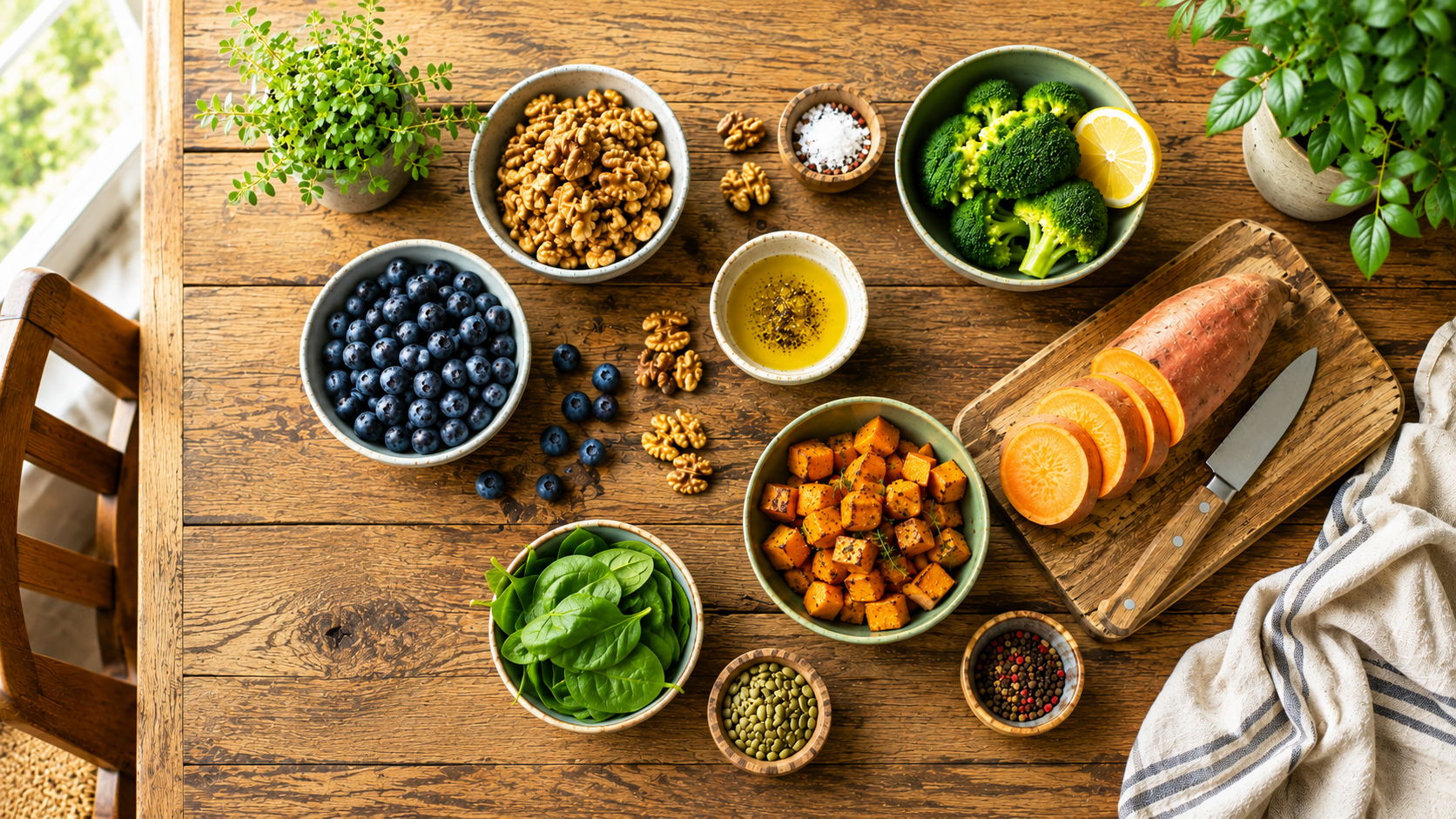
Aim to fill roughly half of each plate with vegetables and fruits. They’re naturally low in sodium, provide potassium (which helps counterbalance sodium’s effect on blood pressure), and supply fiber that supports healthy cholesterol levels. Dark leafy greens, berries, and cruciferous vegetables like broccoli tend to offer the most nutritional density per bite, which matters when appetite or portion sizes shrink with age.
Whole Grains and Fiber
Swapping refined grains (white bread, white rice) for whole-grain versions (oats, brown rice, whole-wheat bread) increases fiber intake, which has a measurable effect on LDL (“bad”) cholesterol over time. Fiber also supports digestive regularity, which becomes a more common concern for seniors and ties directly into overall comfort and appetite.
Lean Proteins and Plant-Based Options
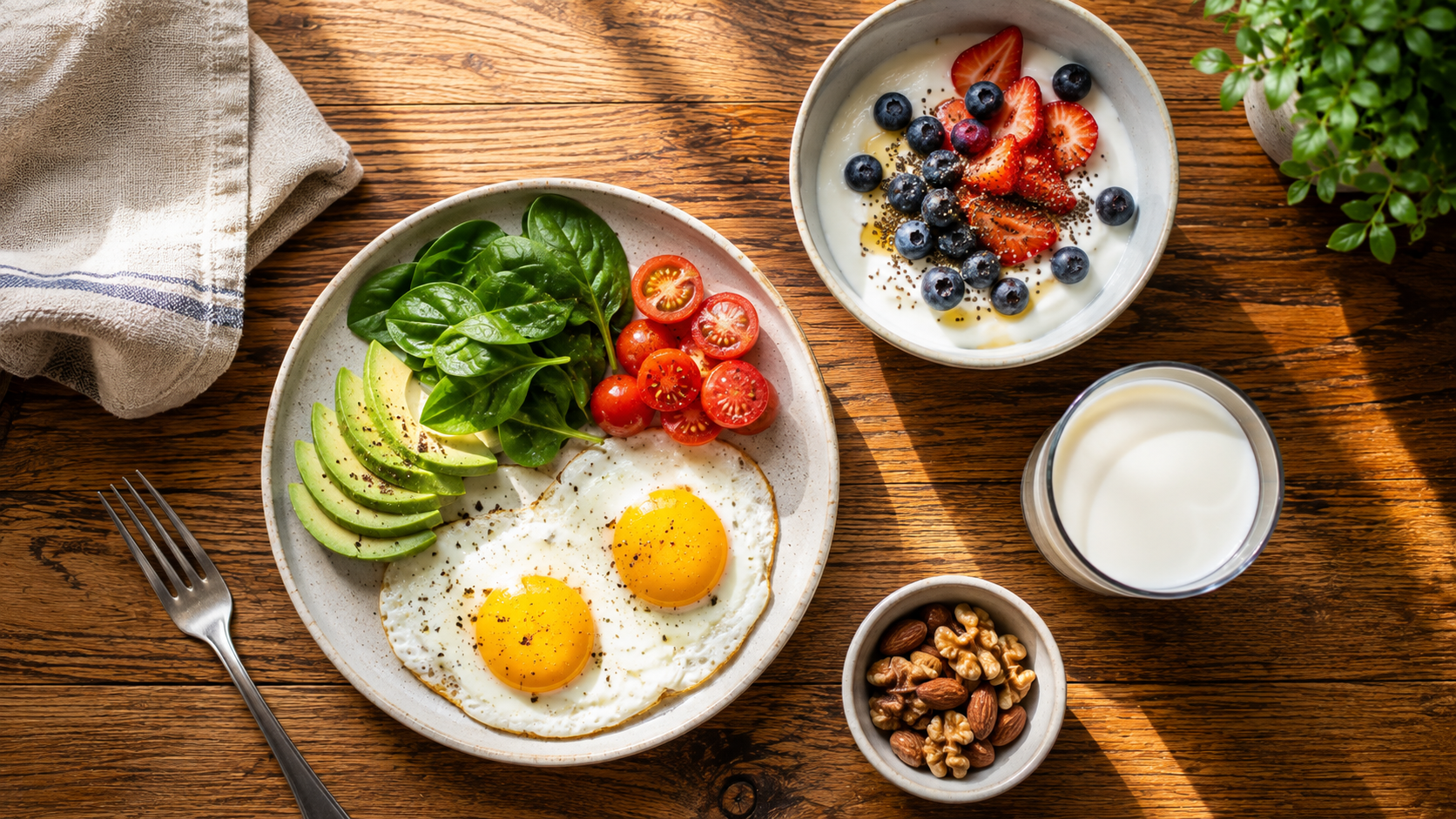
Fish — particularly fatty varieties like salmon, mackerel, and sardines — provides omega-3 fatty acids that support heart rhythm and reduce inflammation. Poultry, eggs, and plant-based proteins like beans, lentils, and tofu are also solid choices. The American Heart Association’s most recent guidance specifically highlights legumes as an underused protein source worth prioritizing more heavily, especially as a partial replacement for red and processed meats.
Healthy Fats
Not all fat works against heart health — unsaturated fats found in olive oil, avocados, nuts, and seeds actually support healthy cholesterol ratios when they replace saturated fat rather than simply adding to total calorie intake. The distinction matters: swapping butter for olive oil in cooking is a genuine improvement; adding olive oil on top of an already high-fat diet is not.
Foods to Limit for Heart Health as You Age
Knowing what to reduce matters just as much as knowing what to add — arguably more, since these are often foods that have been part of someone’s routine for decades.
Sodium
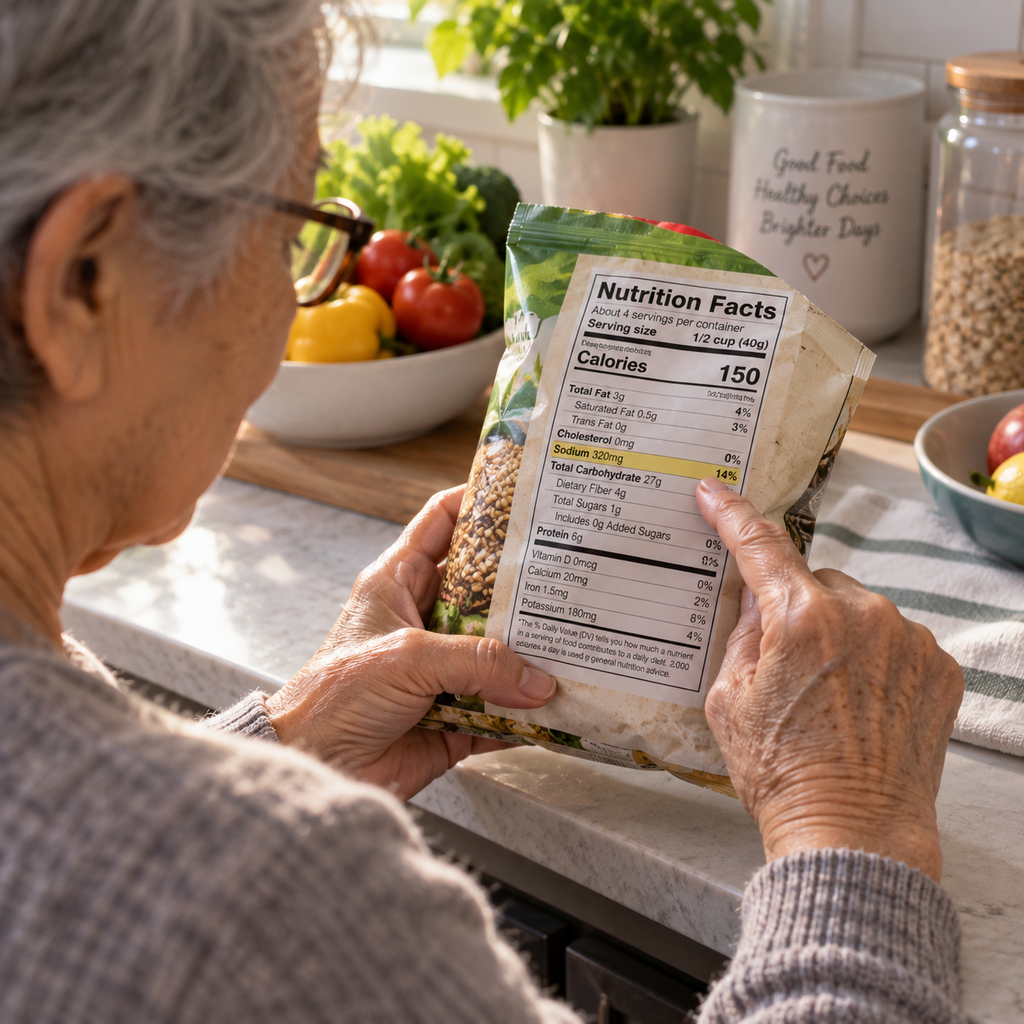
Sodium reduction lowers blood pressure across nearly every population studied, but the effect is measurably stronger in older adults specifically. Most excess sodium doesn’t come from the salt shaker — it comes from processed and packaged foods, canned soups, deli meats, and restaurant meals. Reading nutrition labels and comparing sodium content across similar products (a habit worth building deliberately) often reveals surprising differences between near-identical items.
Saturated and Trans Fats
Fatty cuts of red meat, full-fat dairy, fried foods, and many packaged baked goods carry saturated or trans fats that raise LDL cholesterol over time. This doesn’t mean eliminating them entirely — it means treating them as occasional rather than daily choices, and looking for leaner or plant-based swaps where reasonable.
Added Sugars
Sugary beverages and heavily processed sweets contribute to weight gain, blood sugar swings, and — over years — measurable cardiovascular strain. The American Heart Association recommends keeping added sugar intake modest, and for seniors managing blood sugar alongside heart health, this often matters even more than it did earlier in life.
Special Considerations for Seniors
A few factors specific to aging change how a heart-healthy diet for seniors should actually be applied in daily life — considerations that general nutrition advice aimed at all adults tends to skip.
Medication interactions. Certain heart and cholesterol medications interact directly with food. Grapefruit and grapefruit juice, for example, can interfere with how statins and some blood pressure medications are metabolized. Vitamin K-rich leafy greens can affect blood thinners like warfarin if intake changes suddenly rather than staying consistent. None of this means avoiding these foods — it means keeping intake steady and mentioning your typical diet to your doctor or pharmacist when starting a new medication.
Kidney function and potassium. Potassium from fruits and vegetables is genuinely beneficial for blood pressure, but for the subset of seniors managing reduced kidney function, potassium needs to be monitored rather than simply maximized. This is a conversation for a doctor or dietitian, not a reason to avoid vegetables broadly.
Appetite and portion changes. Reduced appetite is common with age, which can make it tempting to reach for whatever’s easiest — often processed, convenient, and higher in sodium. Building a small rotation of easy, heart-healthy go-to meals in advance removes decision fatigue on lower-energy days.
Chewing and texture. Dental changes or difficulty chewing can quietly push someone away from fibrous vegetables and toward softer, more processed alternatives. Cooking vegetables until tender, using canned beans instead of tougher whole legumes, or blending soups are practical workarounds that preserve nutrition without requiring difficult chewing.
A Simple Heart-Healthy Meal Framework
Rather than tracking every gram of sodium or fat, a simpler mental model works for most people: build each meal around vegetables and whole grains, add a palm-sized portion of lean protein or legumes, use unsaturated fats for cooking and dressing, and treat red meat, fried foods, and sugary items as occasional rather than everyday choices. This isn’t a strict diet — it’s a default pattern that still leaves plenty of room for the occasional treat or family meal that doesn’t perfectly fit the mold.
Common Mistakes That Undermine a Heart-Healthy Diet for Seniors
Assuming “low-fat” automatically means heart-healthy. Many low-fat packaged products compensate for reduced fat with added sugar and sodium, which can work against the goal rather than supporting it. Reading the full label matters more than trusting the front-of-package claim.
Cutting salt but not reading labels. Someone can stop adding salt at the table entirely and still consume most of their daily sodium limit from a single can of soup or a deli sandwich. The shaker is rarely the main source.
Treating fish oil supplements as a replacement for actual fish. Whole-food sources of omega-3s come packaged with other beneficial nutrients that a supplement alone doesn’t replicate. Supplements can be a reasonable addition, but they work best alongside — not instead of — actual fatty fish in the diet.
Making changes too abruptly. A sudden, dramatic diet overhaul is harder to sustain than gradual, consistent swaps. Replacing one or two meals a week with a heart-healthy version, then building from there, tends to stick far better than an all-or-nothing approach.
FAQ
What is the best diet for heart health in seniors? Most current guidance points to Mediterranean or DASH-style eating patterns — rich in vegetables, fruits, whole grains, lean proteins, and unsaturated fats, while limiting sodium, saturated fat, and added sugar. Neither requires perfection, and both can be adapted to personal taste and cultural food preferences.
How much sodium should seniors have per day? General guidance recommends limiting sodium significantly below typical average intake, though exact targets can vary based on individual health conditions like high blood pressure or kidney function. A doctor or dietitian can provide a specific number based on personal health history.
Are eggs bad for heart health in older adults? Current research generally views eggs as a reasonable part of a heart-healthy diet in moderation, particularly when they replace less heart-friendly protein sources rather than adding to an already high-cholesterol diet overall.
Can diet alone lower cholesterol without medication? Diet changes can meaningfully improve cholesterol levels for many people, sometimes enough to reduce or delay the need for medication — but this varies by individual and existing health conditions, and should be discussed with a doctor rather than assumed.
Is red meat completely off-limits for heart health? No — most guidance suggests treating red meat as an occasional choice rather than a daily staple, not eliminating it entirely. Leaner cuts and smaller portions, paired with more frequent plant-based or fish-based meals, achieve most of the benefit without requiring total avoidance.
Conclusion
A heart-healthy diet for seniors isn’t about strict rules or giving up favorite foods entirely — it’s about shifting the everyday default toward more vegetables, whole grains, and healthy fats, while treating sodium-heavy, highly processed, and sugar-laden foods as occasional rather than routine. Small, consistent changes compound over years in exactly the way that matters most for long-term cardiovascular health. Pairing this with the other foundations covered in our anti-inflammatory foods guide and hydration tips for seniors rounds out a genuinely comprehensive approach to eating well in later life.
If you’re also focused on other nutritional priorities, our guides on high-protein foods after 60 and the best superfoods for seniors cover complementary ground worth exploring alongside this one.
For further reading, the American Heart Association’s 2026 dietary guidance for cardiovascular health offers a deeper, research-backed look at the eating pattern outlined here.
Disclaimer
This article is for informational and educational purposes only and is not a substitute for professional medical advice. Always consult your doctor, pharmacist, or a registered dietitian before making significant changes to your diet, especially if you take medications, manage a chronic condition, or have specific dietary restrictions.