Learning how to explain dementia to grandchildren in a way they’ll understand represents a genuinely important task, since children often sense that something has changed with a grandparent long before they receive any clear explanation, sometimes filling this information gap with confusion, fear, or self-blame if adults don’t provide honest, age-appropriate guidance.
Having supported countless families navigating exactly this conversation, I want to walk through practical, honest approaches that help children genuinely understand and cope with a grandparent’s dementia, rather than protecting them through silence that often creates more anxiety than clear information would.
Why Honest Explanation Matters, Even for Young Children
Children are remarkably perceptive, often noticing changes in a grandparent’s behavior, memory, or personality well before receiving any adult explanation. Without honest information, children frequently fill this gap with their own explanations, which are often more frightening or self-blaming than the actual reality — wondering if they did something wrong, or developing anxious, confused theories about what’s happening.
Providing honest, age-appropriate explanation, rather than avoiding the topic entirely, generally reduces rather than increases children’s anxiety, since clear understanding typically feels less frightening than confused uncertainty about unexplained changes they’ve already noticed themselves.
Recognizing Signs a Child Might Be Struggling Silently
Not all children express their feelings about a grandparent’s dementia openly, meaning some may be processing genuine confusion, fear, or grief without clearly communicating this to adults around them. Watching for behavioral changes — increased clinginess, difficulty sleeping, regression in younger children, or withdrawal in older children and teenagers — can help identify when a child may need additional support beyond the initial explanation conversation.
Creating regular, low-pressure opportunities for children to share how they’re feeling, rather than assuming silence means everything is fine, helps catch and address struggling children earlier, before unexpressed feelings potentially compound into more significant emotional difficulty. This might be as simple as periodically checking in during a car ride or before bedtime, asking open-ended questions about how they feel about visiting or thinking about their grandparent, without pressuring them into a particular response.
Addressing Common Questions Children Often Ask
Certain questions arise commonly across many families navigating this experience, and having thoughtful, prepared responses can help you feel more confident when these moments arise naturally in conversation. Children frequently ask whether they might “catch” dementia, whether their parent (the grandparent’s adult child) will also develop it, or why the grandparent sometimes seems like a “different person.”
Preparing honest, age-appropriate responses to these common questions in advance — dementia isn’t contagious, having a family history doesn’t guarantee developing it themselves, and explaining that illness can change how someone acts without erasing who they fundamentally are — helps you respond confidently and calmly when these genuinely common questions arise, rather than feeling caught off guard by predictable, understandable childhood curiosity about this confusing experience.
Adjusting Your Explanation Based on Age
Children’s capacity to understand dementia varies considerably by developmental stage, making age-appropriate adjustment essential for genuine comprehension.
For young children (roughly ages 4-7): Simple, concrete explanations work best — “Grandma’s brain is sick, and it makes it hard for her to remember things” — without excessive detail that might overwhelm their developmental capacity to process complex medical information.
For school-age children (roughly ages 8-12): More detailed explanation becomes appropriate, including basic information about how the brain works and why dementia affects memory and behavior, while still avoiding overly clinical or frightening detail.
For teenagers: More sophisticated, detailed conversation, including space for their own questions and concerns, respects their more advanced cognitive capacity while still providing genuine emotional support for what remains a difficult, often confusing experience even at this more mature developmental stage.
Involving Parents and Other Adult Caregivers in a Unified Approach
When multiple adults in a family are involved in a child’s life — both parents, other grandparents, teachers — coordinating a consistent, unified approach to discussing dementia helps prevent confusing or contradictory messages that could increase rather than reduce a child’s uncertainty about the situation.
How to approach it: Briefly discussing with other key adults in the child’s life what language and explanations you’re using, and encouraging consistency across these different relationships, helps create a coherent, stable understanding for the child, rather than navigating potentially different explanations from different trusted adults that could create additional confusion during an already difficult family experience.
Use Concrete, Relatable Comparisons
Abstract medical explanations often don’t resonate with children, while concrete comparisons to familiar experiences can make the concept more accessible and understandable.
How to do it: Comparing the brain to a filing cabinet where papers have gotten mixed up, or explaining that dementia is like a movie where scenes play in the wrong order, can help children grasp an abstract medical concept through more familiar, concrete imagery they can genuinely relate to and understand.
Preparing Children for Later-Stage Changes Gradually
As dementia progresses, families often face the question of how much to prepare children for more significant future changes — increased confusion, difficulty with basic communication, or eventual move to a care facility. Rather than overwhelming children with distant future possibilities all at once, gradual, ongoing conversation that evolves alongside the actual progression tends to feel more manageable than a single comprehensive explanation covering the entire potential trajectory of the condition upfront.
How to approach it: Introducing new information as it becomes relevant, rather than front-loading every possible future change into an initial conversation, respects children’s developmental capacity to process difficult information gradually, allowing them to build understanding incrementally alongside the actual unfolding experience rather than carrying anxiety about distant, hypothetical future changes that may feel overwhelming when presented all at once, far in advance of when they’ll actually need to be processed and understood.
Reassure Them It’s Not Their Fault
Children, particularly younger ones, often internalize blame for things they don’t understand, making explicit reassurance that dementia isn’t caused by anything they did particularly important.
How to do it: Directly stating that dementia isn’t caused by anything the child said or did, and isn’t something they could have prevented or can fix through good behavior, addresses this common, often unspoken worry that children may not directly voice but genuinely carry.
Prepare Them for Specific Behavioral Changes
Rather than only explaining dementia in the abstract, preparing children for specific behaviors they might witness helps reduce the shock or confusion of encountering these changes without warning.
How to do it: Explaining that Grandpa might not remember their name sometimes, might ask the same question repeatedly, or might seem confused about where he is, prepares children for these specific experiences rather than leaving them unprepared to encounter and interpret these changes independently.
Validate Their Feelings, Whatever They Are
Children may experience a wide range of emotions about a grandparent’s dementia — sadness, fear, confusion, even embarrassment — all of which deserve validation rather than dismissal or correction.
How to do it: Creating space for children to express whatever they’re genuinely feeling, without judgment or pressure to feel a particular “correct” way about the situation, supports healthier emotional processing than expecting children to only express socially acceptable emotions like sadness or sympathy.
Involve Them in Connection, Not Just Information
Beyond explanation, helping children find ways to maintain meaningful connection with their grandparent, adapted to the grandparent’s current capacity, supports continued relationship despite significant changes.
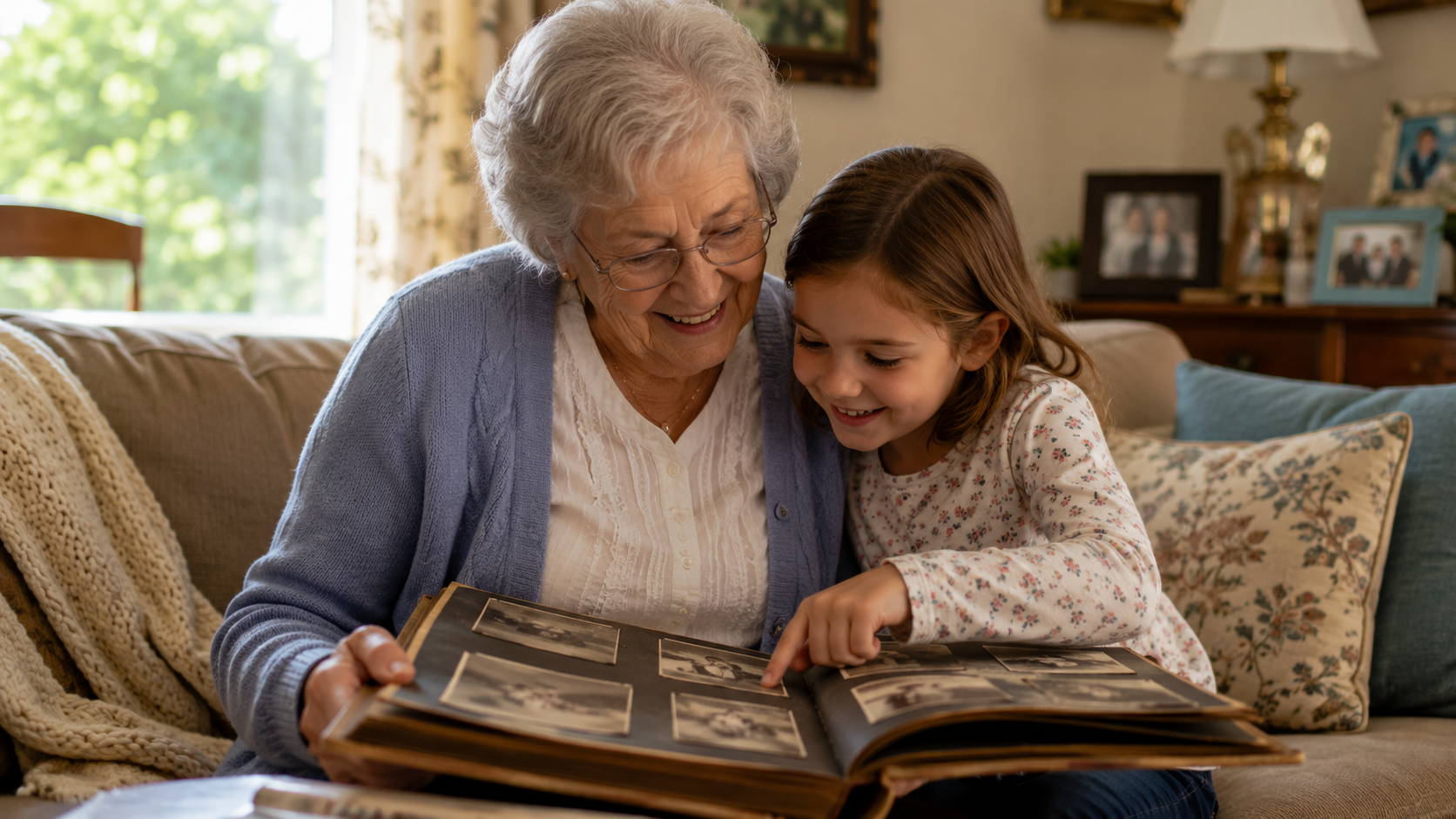
How to do it: Suggesting activities that don’t rely heavily on memory — looking at photos together, listening to music, simple sensory activities — helps children continue experiencing genuine connection and positive interaction with their grandparent, rather than avoiding contact entirely due to discomfort or uncertainty about how to interact.
Use Age-Appropriate Books and Resources
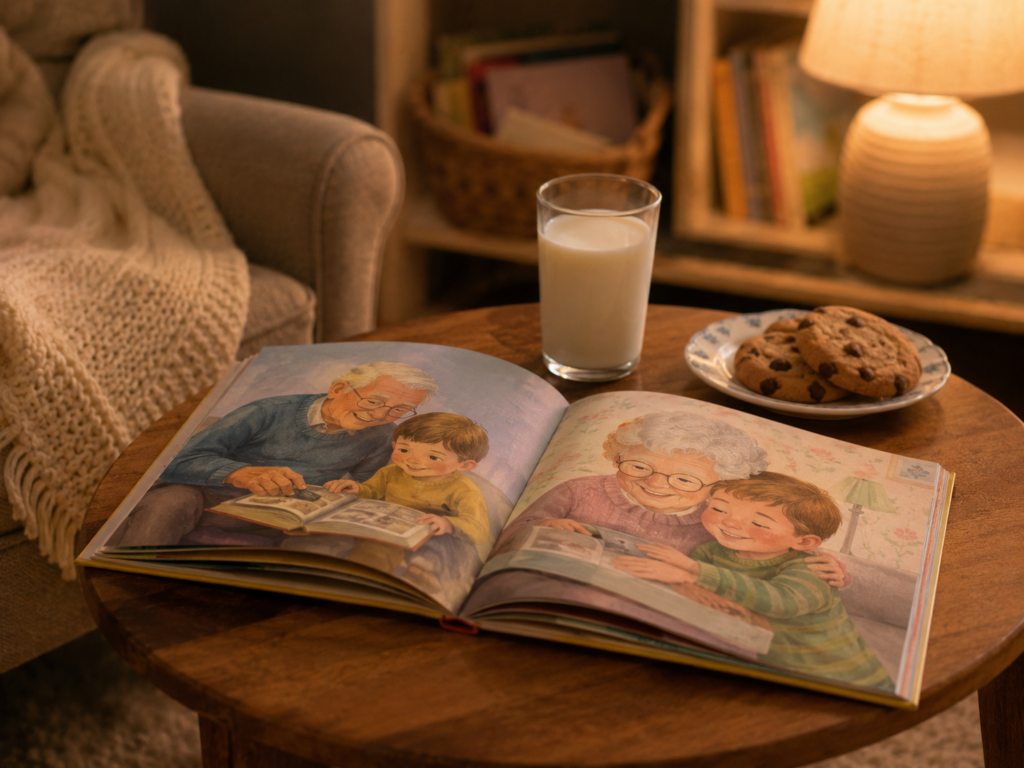
Several children’s books specifically address dementia and Alzheimer’s disease in age-appropriate ways, providing additional support beyond a single verbal conversation.
How to do it: Reading these books together, rather than simply providing them for independent reading, creates natural opportunities for questions and discussion, while also modeling that this is a topic comfortable enough to discuss openly within your family.
Creating Space for Ongoing Family Rituals and Memory-Making
Even as a grandparent’s dementia progresses, finding ways to continue creating positive memories and maintaining family rituals — a favorite holiday tradition, a regular activity, or simply consistent visits — provides children with continued positive experiences alongside the more difficult aspects of this family journey. These ongoing positive experiences help balance the genuine difficulty of watching a grandparent change, ensuring the relationship isn’t defined solely by loss and difficulty, but continues to include genuine connection and positive shared experience throughout this process.
Encouraging children to actively participate in creating these continued memories — perhaps helping select photos for a memory book, or contributing to a simple family tradition adapted for the grandparent’s current capacity — can provide children with a sense of meaningful contribution and agency during an experience that might otherwise feel entirely outside their control, offering genuine comfort alongside the more challenging emotional aspects of this significant family transition.
Building Ongoing, Not Just One-Time, Communication
Rather than treating this as a single conversation to complete and move past, recognizing that children’s understanding and questions will likely evolve over time, as the grandparent’s condition progresses, supports more genuine, sustained communication throughout this experience.
For a broader look at communication strategies more generally relevant to dementia interactions, our article on how to talk to someone with dementia without correcting or arguing covers related communication approaches that can also help guide how children interact with their grandparent.
According to the National Institute on Aging, honest, age-appropriate communication with children about a family member’s dementia supports healthier emotional processing and continued family connection.
Frequently Asked Questions
Should I bring my grandchild to visit even if the grandparent doesn’t recognize them anymore? This depends on the individual child and situation, but many families find that continued visits, with appropriate preparation and support, provide genuine value for both the child and grandparent, even when memory recognition has become significantly affected.
What if my child seems scared or reluctant to visit their grandparent? This is a normal, understandable response worth taking seriously rather than forcing interaction, though gentle encouragement alongside patience and no pressure can sometimes help children work through initial discomfort at their own pace.
How do I explain it if my child asks whether their grandparent is going to die? This depends on the specific situation and prognosis, but generally, honest, age-appropriate answers work better than avoidance, potentially including that dementia is a serious illness while avoiding overly specific predictions you cannot actually know with certainty.
Should teachers or school counselors be informed about a grandparent’s dementia diagnosis? This can be genuinely helpful, particularly if the child seems to be struggling emotionally, since teachers and counselors can provide additional support and understanding if they’re aware of this significant family situation affecting the child both at home and potentially in their schoolwork or behavior.
Conclusion
How to explain dementia to grandchildren in a way they’ll understand comes down to honest, age-appropriate communication, concrete comparisons, and ongoing support for their emotional experience throughout this family journey. This thoughtful, honest approach helps children navigate a genuinely difficult experience with understanding rather than confusion or unspoken fear.
Modeling Healthy Emotional Processing for the Next Generation
Beyond the specific explanation itself, how you as an adult navigate and discuss a parent’s dementia provides children with a genuine model for how families can face difficult experiences with honesty, love, and resilience. This modeling, perhaps even more than any specific words used in a single conversation, teaches children valuable lessons about facing life’s genuine difficulties with both honesty and continued love, lessons that will serve them throughout their own lives well beyond this particular family experience and into their own future relationships.
Disclaimer: This article is intended for general informational and educational purposes only and does not constitute medical or psychological advice. If a child seems to be struggling significantly with this experience, please consult a pediatrician or child psychologist for additional guidance and support.