Anxiety in later life often gets overlooked or misattributed to “just worrying” or personality, when in reality it’s a genuine, common, and treatable experience that deserves the same attention as anxiety at any other life stage. Managing anxiety as you get older sometimes requires different strategies than those commonly discussed for younger adults, given how life circumstances, health concerns, and even brain changes can shape how anxiety shows up in these later years specifically.
Having worked with seniors experiencing anxiety in many different forms, from generalized worry to specific health-related fears, I want to walk through what genuinely helps, and why anxiety in later life deserves to be taken seriously rather than dismissed as simply part of getting older.
Why Anxiety Often Changes in Later Life
Anxiety doesn’t necessarily look the same at 70 as it did at 30. New sources of anxiety often emerge — health concerns, financial security in retirement, loss of loved ones, changes in independence — while some previous anxiety triggers may become less relevant. Additionally, anxiety symptoms sometimes present more physically in older adults, showing up as digestive complaints, sleep disruption, or fatigue rather than the more classically recognized worry and racing thoughts.
This shift means anxiety in later life sometimes goes unrecognized, either dismissed as a normal response to legitimate life circumstances or misattributed entirely to physical health concerns without anyone considering the underlying anxiety actually driving many of these physical symptoms.
Recognizing Anxiety for What It Is
Anxiety involves persistent worry, physical tension, and sometimes specific fears that feel disproportionate to actual risk, even when the underlying concern (health, finances, safety) is genuinely legitimate. The key distinguishing factor isn’t whether the worry itself makes sense — many worries in later life are entirely reasonable — but whether the anxiety response has become disproportionate to the actual situation, or is significantly interfering with quality of life and daily functioning.
Recognizing this distinction matters because it shifts the goal from eliminating all worry (which isn’t realistic or even desirable, since some concern about genuine risks serves a protective function) toward managing anxiety so it doesn’t dominate daily life or prevent engagement with things that matter to you.
How Age-Related Brain Changes Can Influence Anxiety
It’s worth understanding that some age-related changes in brain chemistry and structure can genuinely influence anxiety, separate from life circumstances alone. Changes in neurotransmitter regulation, alterations in how the brain processes stress hormones, and in some cases, the effects of chronic health conditions or certain medications can all contribute to anxiety symptoms that have a genuine physiological component, not simply a psychological or circumstantial one.
This matters because it reinforces that anxiety in later life isn’t purely a matter of willpower or attitude — there can be real biological factors at play, which is part of why professional evaluation sometimes reveals treatable contributing factors, like a thyroid imbalance or medication side effect, that wouldn’t be identified through self-management strategies alone, however well-intentioned and consistently applied.
Anxiety Following Major Life Transitions
Certain life transitions common in later years — retirement, the loss of a spouse, moving to a new living situation, or a new health diagnosis — often trigger or intensify anxiety, sometimes even in people without any significant prior history of anxiety earlier in life. This transition-triggered anxiety deserves the same genuine attention as anxiety with a longer history, rather than being dismissed as an expected, temporary response that will simply resolve on its own without any active management.
If you’ve noticed new or intensified anxiety following a significant life change, connecting this pattern explicitly — both for your own understanding and when discussing it with a doctor or therapist — can help identify the most relevant, targeted strategies for your specific situation, rather than applying generic anxiety advice disconnected from the actual triggering circumstances.
Address Health Anxiety Directly
Health concerns become increasingly common with age, and anxiety specifically related to health — sometimes called health anxiety — can become a significant, distressing pattern for many older adults.
What helps: Working with your doctor to establish a clear, trusted plan for monitoring genuine health concerns can reduce the uncertainty that often fuels health anxiety, while learning to distinguish between productive health vigilance and anxiety-driven catastrophizing helps interrupt the cycle of excessive worry that doesn’t actually improve health outcomes.
Manage Financial Anxiety With Concrete Information
Uncertainty about financial security in retirement is a common, legitimate source of anxiety, sometimes made worse by avoiding the concrete financial planning that could actually provide reassurance.
What helps: Meeting with a financial advisor to get clear, specific information about your actual financial situation, rather than relying on vague worry, often reduces anxiety considerably, since concrete facts — even if not perfectly reassuring — tend to feel more manageable than uncertain, unexamined fear.
Practice Grounding Techniques for Acute Anxiety
When anxiety feels acute and overwhelming, grounding techniques can help interrupt the spiral of anxious thoughts and bring attention back to the present moment.
What helps: Simple techniques like naming five things you can see, four you can hear, and three you can physically feel, or focused deep breathing, can provide genuine relief during moments of acute anxiety, offering a practical tool you can use anywhere, without requiring special equipment or preparation.
Stay Physically Active
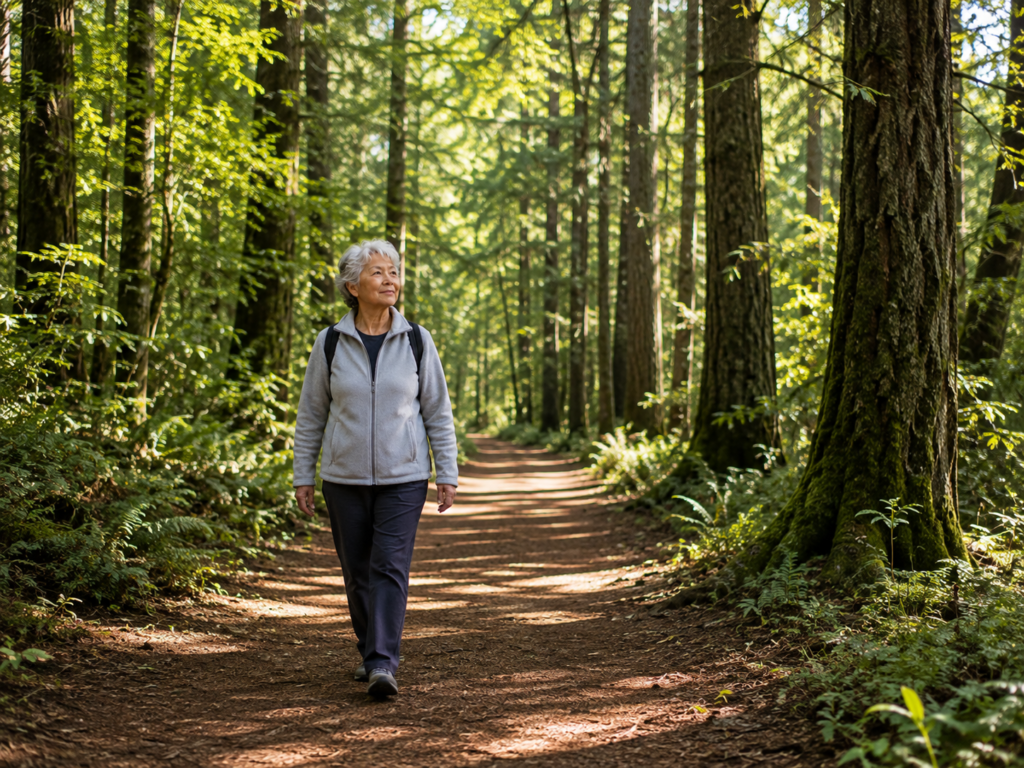
Regular physical activity has well-documented anxiety-reducing effects, working through several biological mechanisms including stress hormone regulation and the release of mood-supporting neurotransmitters.
What helps: Even moderate activity, like regular walking, provides measurable anxiety-reducing benefit, making this one of the most accessible, evidence-supported strategies available for managing anxiety at any age, including well into later life.
Maintain Social Connection
Isolation and anxiety often feed into each other — anxiety can lead to social withdrawal, while reduced social contact can worsen anxiety, creating a difficult cycle that becomes harder to interrupt the longer it continues.
What helps: Actively maintaining social connection, even when anxiety makes this feel difficult, tends to provide genuine relief over time, interrupting this cycle rather than allowing it to continue reinforcing itself through increasing isolation.
Consider Professional Support
Anxiety that significantly affects quality of life or daily functioning often benefits from professional treatment, including therapy approaches like cognitive behavioral therapy, which has strong research support for anxiety across all age groups, including older adults.
What helps: Many people assume anxiety treatment is primarily for younger people, but therapy and, when appropriate, medication can be genuinely effective at any age, and seeking this support reflects proactive self-care rather than any sign of weakness or failure to cope independently.
How Family Members Can Offer Meaningful Support
If you’re supporting a parent or loved one managing anxiety, understanding a few key principles can help you provide genuinely helpful support rather than inadvertently reinforcing the anxiety. Avoid excessive reassurance-seeking cycles, where repeatedly answering the same anxious question provides only temporary relief while ultimately reinforcing the underlying anxious pattern rather than helping resolve it. Instead, gently encouraging engagement with genuine coping strategies, and validating the difficulty of the feeling without necessarily validating every specific anxious thought as accurate, tends to provide more helpful, sustainable support over time.
Encouraging professional support when anxiety seems significant, while avoiding dismissive responses like “just stop worrying,” which rarely helps and can feel invalidating to someone genuinely struggling, supports a more compassionate, effective approach to helping a loved one navigate this experience.
Distinguish Between Anxiety and Normal Concern
Part of managing anxiety involves learning to recognize when worry has become disproportionate versus when it reflects genuine, reasonable concern about an actual situation requiring attention.
What helps: Asking yourself whether a particular worry is leading to productive action (like scheduling a doctor’s appointment for a genuine health concern) or simply cycling without resolution can help distinguish between anxiety requiring management and legitimate concern requiring practical response.
The Role of Sleep in Anxiety Management
Sleep and anxiety share a bidirectional relationship — poor sleep can worsen anxiety, while anxiety can significantly interfere with sleep quality, creating a difficult cycle that can feel hard to interrupt from either direction. Addressing sleep quality directly, through the strategies discussed in our broader articles on sleep, often provides meaningful anxiety relief as a secondary benefit, even when sleep wasn’t the primary focus of intervention.
This connection is worth keeping in mind if you’re managing both anxiety and sleep difficulties simultaneously, since improvements in one area often support improvement in the other, meaning addressing either concern doesn’t need to happen in complete isolation from the other, and progress in one domain can create positive momentum that supports the other as well.
Building a Realistic Approach to Managing Anxiety
Rather than expecting to eliminate anxiety entirely, a more realistic goal involves building a toolkit of strategies — physical activity, grounding techniques, social connection, and professional support when needed — that helps manage anxiety so it doesn’t dominate daily life or prevent engagement with things that genuinely matter to you. This toolkit approach, drawing on multiple complementary strategies rather than relying on any single technique alone, tends to provide more reliable, sustainable relief across the varied situations and triggers that anxiety can present in daily life.
For a broader look at stress management strategies that complement anxiety management specifically, our article on ways to reduce stress naturally covers additional approaches that work alongside the strategies discussed here.
According to the National Institute on Aging, anxiety disorders are common among older adults and respond well to treatment, including therapy and, when appropriate, medication, making professional support a genuinely valuable option worth considering.
Frequently Asked Questions
Is anxiety in older adults different from anxiety in younger people? While the core experience of anxiety remains similar, the specific triggers and how symptoms present sometimes differ, with health and financial concerns becoming more common triggers, and physical symptoms sometimes more prominent than in younger adults.
Can anxiety develop for the first time in later life, even without a prior history? Yes — new-onset anxiety can emerge in later life, sometimes triggered by significant life changes like retirement, loss of a spouse, or new health diagnoses, even without any prior history of anxiety earlier in life.
Are anxiety medications safe for older adults? Many anxiety medications can be used safely in older adults, though dosing and specific medication choices sometimes need adjustment given how metabolism and medication interactions can differ with age, making this an important conversation to have directly with your doctor rather than relying on general assumptions about medication safety at any given age.
How is anxiety different from normal worry about legitimate concerns like health or finances? The key difference typically involves whether the worry leads to productive action and eventually resolves, or whether it persists disproportionately, interferes with daily functioning, and doesn’t ease even when addressed through reasonable, concrete steps taken to address the underlying concern directly.
Conclusion
Managing anxiety as you get older deserves genuine attention, not dismissal as simply an unavoidable part of aging or a personality trait to live with indefinitely. Whether through grounding techniques, physical activity, addressing specific sources of worry directly, or professional support, real strategies exist to help anxiety feel more manageable, supporting a fuller, less constrained experience of your later years.
Recognizing That Seeking Help Reflects Strength, Not Weakness
Many people in this generation grew up with messaging that discouraged discussing mental health openly, sometimes making it harder to recognize anxiety for what it is or to seek support without feeling embarrassed. Reframing this — recognizing that addressing anxiety directly reflects genuine strength and self-awareness, not weakness — can make it considerably easier to take the steps discussed throughout this article, whether that’s trying a grounding technique or reaching out to a therapist for the first time.
This shift in perspective often takes conscious, repeated effort to internalize, particularly for those who spent decades believing that managing difficult emotions privately, without outside help, was simply what capable, resilient people did. Recognizing that this belief, however deeply held, doesn’t actually reflect the most effective or healthiest approach to genuine anxiety can open the door to support that might otherwise feel unavailable or unnecessary.
Disclaimer: This article is intended for general informational and educational purposes only and does not constitute medical or mental health advice. If anxiety significantly affects your daily functioning or quality of life, please consult your doctor or a mental health professional.